
Why 35% of Pet Owners Expect to Change Vets in 2026

The bond between a veterinary practice and a pet parent is no longer guaranteed by local proximity or clinical skill alone. Our 2026 Pet Parent Research Report reveals that a significant shift in loyalty is currently underway across the industry. According to our data, 35% of pet parents say they are likely to change their vet clinic in the next year.
This trend creates a massive risk for practices, especially as younger generations become the dominant pet-owning demographic. In fact, 48% of pet parents aged 18–34 plan to switch practices in the coming months. To protect your business, you must focus on veterinary client retention by closing the gap between the digital experience clients expect and the service they actually receive.
Table of Contents
- Key takeaways from the report
- What causes pet parents to switch vets?
- How the “satisfaction gap” puts your practice at risk
- Why appointment booking issues drive clients away
- Is your website losing you clients?
- How online reviews and trust build loyalty
- How can your practice be discovered?
- What should your clinic implement to improve retention?
- How Vetstoria helps you attract and retain your clients
- Download the full report
- Frequently asked questions
Key takeaways from the report
- The loyalty gap: 35% of all pet parents plan to switch their vet clinic within the next year.
- High-risk groups: 48% of younger owners (aged 18–34) and 48% of urban pet parents are likely to change practices.
- The friction factor: Clients who have difficulty booking appointments are almost three times more likely to consider a change of vet.
- Clinical care is secure: Only 8% of pet parents leave because they are unhappy with actual veterinary treatment or clinical care.
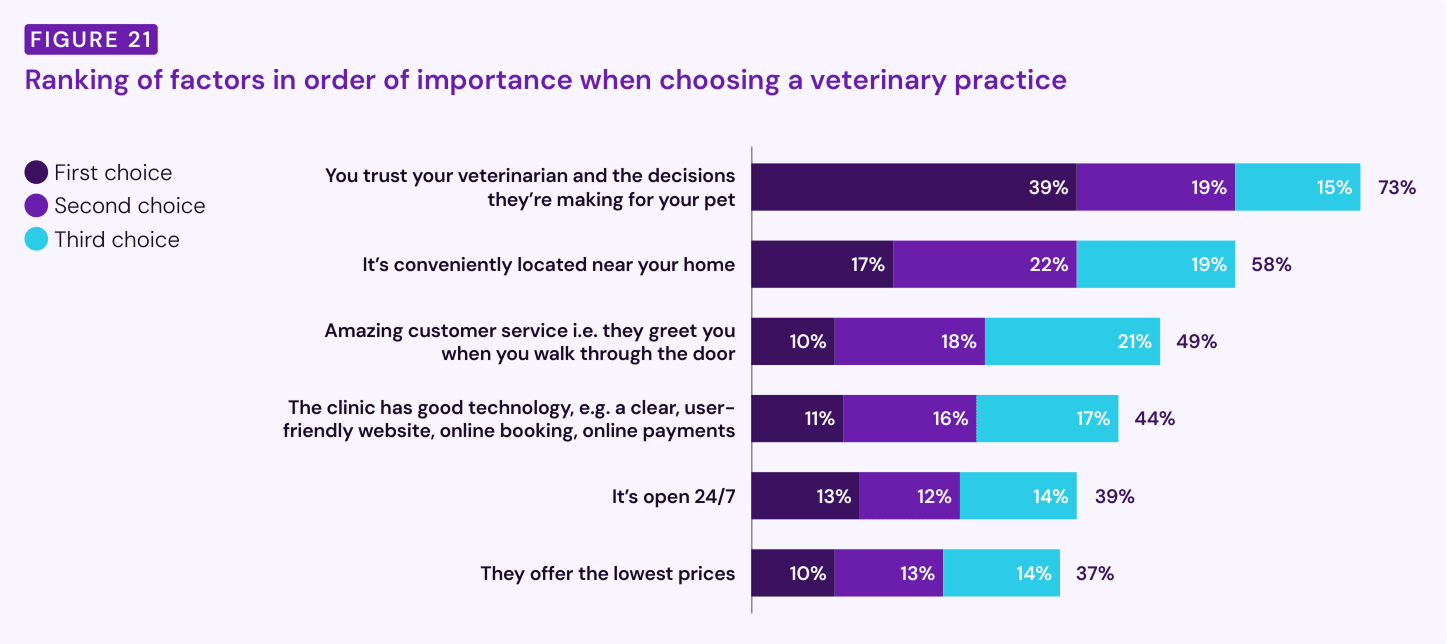
- Cost vs. choice: Cost is the main driver for clients looking to change clinics (32%). However, when it comes to choosing a new vet, cost is less important than trust (73%) and good technology (44%).
- Booking frustrations: 41% of owners are frustrated by long phone hold times, and 34% cite the inability to book online as a major problem.
- Websites are deal-breakers: 29% of pet parents have already decided against a specific clinic because its website was outdated or difficult to use.
- Trust vs. technology: While 73% of owners prioritise trust, they now rank “good technology” (44%) as more important than 24/7 hours or low prices.
What causes pet parents to switch vets?
Many veterinary practices believe they only lose clients when medical outcomes go wrong. However, our research shows a different reality. Clinical care is rarely the primary reason for a client to leave. In fact, only 8% of pet parents switch because they are unhappy with their pet’s actual treatment.
Instead, a combination of financial pressure and service hurdles triggers most moves. Currently, 35% of pet parents say they are likely to change their vet within the next year—a figure that jumps to 48% for 18–34-year-olds.
While cost is the primary driver for these owners to look elsewhere, inefficient service often serves as the final straw. For younger “digital native” owners who value convenience, administrative friction makes it much harder to justify staying with a clinic when they are already questioning the value of the service.
According to our report, these are the main reasons pet parents consider switching:
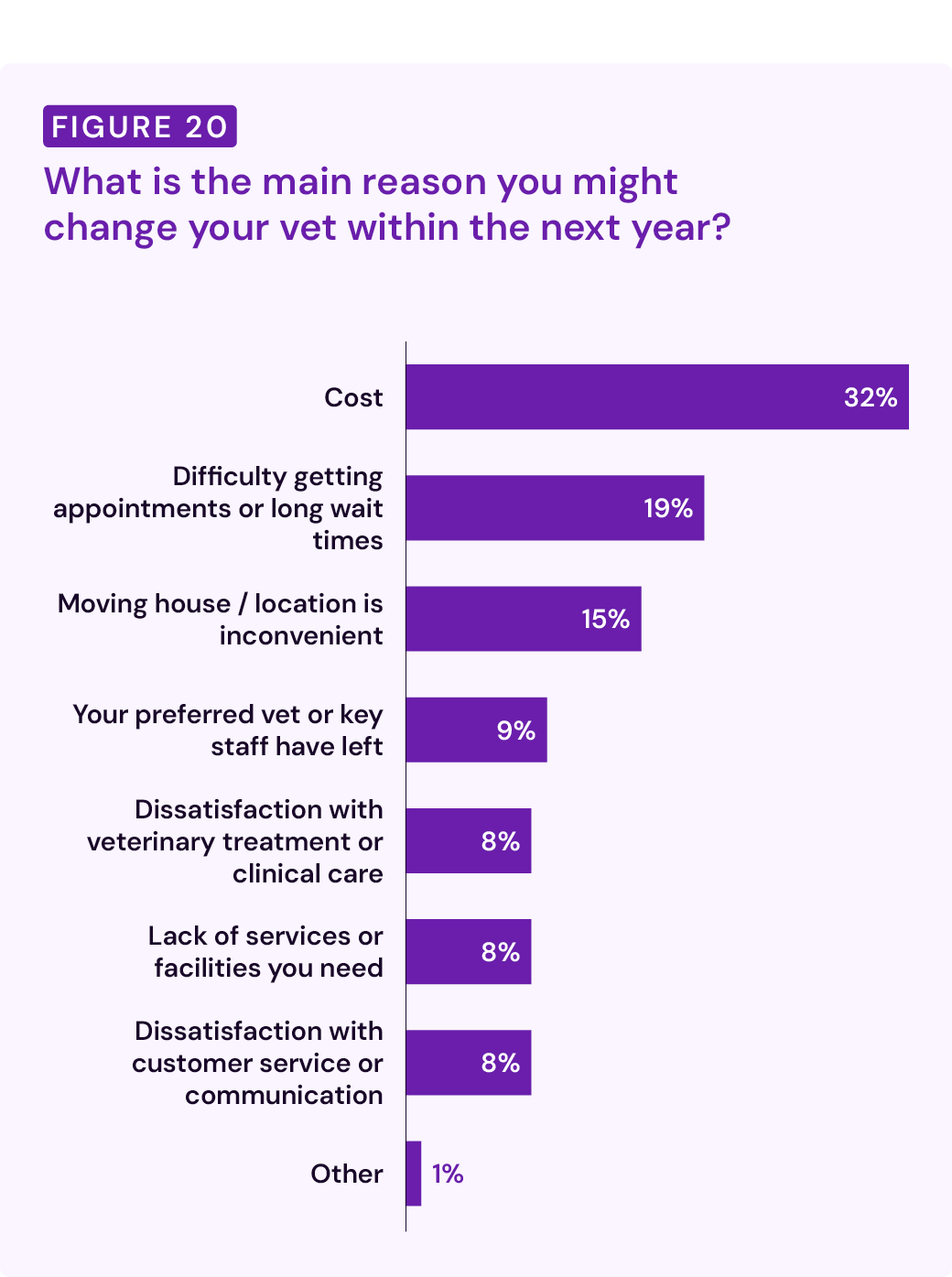
- Cost (32%): Financial concerns remain the biggest driver as owners look for better value.
- Difficulty getting appointments (19%): Long wait times and booking struggles frustrate clients.
- Location inconvenience (15%): Clients often switch if they move house or find a more convenient clinic.
- Staff changes (9%): Turnover of preferred vets or key staff members can damage loyalty.
- Dissatisfaction with veterinary treatment (8%): Pet owners leave because they are unhappy with the clinical care provided.
- Poor customer service (8%): General dissatisfaction with communication drives clients away.
- Lack of services (8%): Owners leave if a clinic does not offer the specific facilities they need.
Aside from cost, booking difficulty is the single biggest service-related reason for churn. In fact, pet parents who struggle to book an appointment are almost three times more likely to consider leaving your practice. You can improve veterinary client retention significantly just by making it easier for people to reach you.
How the “satisfaction gap” puts your practice at risk
A lack of client complaints does not always mean your pet parents are loyal. However, our research reveals a dangerous “satisfaction gap” that often hides a high risk of churn. While very few pet parents are truly unhappy, many do not feel a strong commitment to their current clinic.
Our report shows that less than half of younger pet parents describe themselves as “very satisfied” with their vet. Instead, most fall into the “mainly satisfied” category. This distinction matters because “mainly satisfied” clients often lack unwavering loyalty. If a competitor offers a more convenient experience, these clients will likely switch.
Your practice may be at risk even if your overall satisfaction scores look high. For example, look at how satisfaction levels change across different age groups:
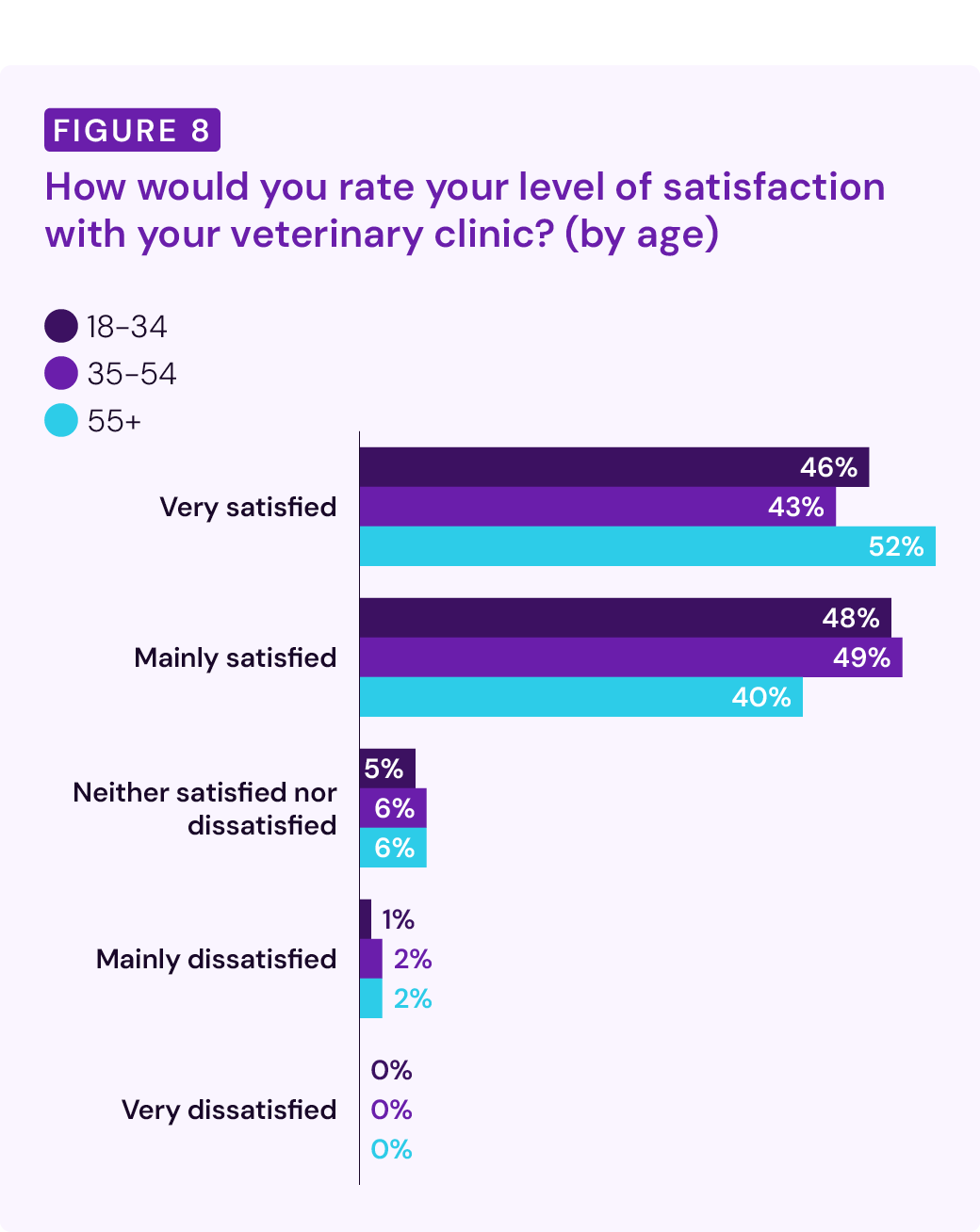
- Age 18–34: Only 46% are “very satisfied,” while 48% are only “mainly satisfied”.
- Age 35–54: 43% are “very satisfied,” but 49% are “mainly satisfied”.
- Age 55+: 52% are “very satisfied,” and 40% are “mainly satisfied”.
Part of this satisfaction gap comes from a lack of digital options. Younger pet parents, in particular, want frictionless interactions. For example, they prefer to make appointments, complete paperwork, and pay bills through their smartphones.
When a clinic relies on older, slower processes, these tech-savvy owners feel frustrated. This frustration leads to lower satisfaction scores and a higher chance of the client leaving.
By closing this satisfaction gap, you can secure your practice against future churn. Improving the administrative side of the client journey is just as important as the clinical care you provide.
Why appointment booking issues drive clients away
The process of booking an appointment is often the first interaction a client has with your practice. However, it is also a major source of frustration that directly impacts veterinary client retention. Our research shows that 58% of pet parents have experienced issues when trying to book with their vet.
These hurdles do more than just cause annoyance. When pet parents face booking difficulties, they are almost three times more likely to consider changing their vet within the next year. This makes the booking experience a critical factor in maintaining a loyal client base.
What are the main booking frustrations?
Pet parents point to several specific problems that make scheduling a visit difficult. Because many clinics still rely on traditional phone systems, clients often face long delays.
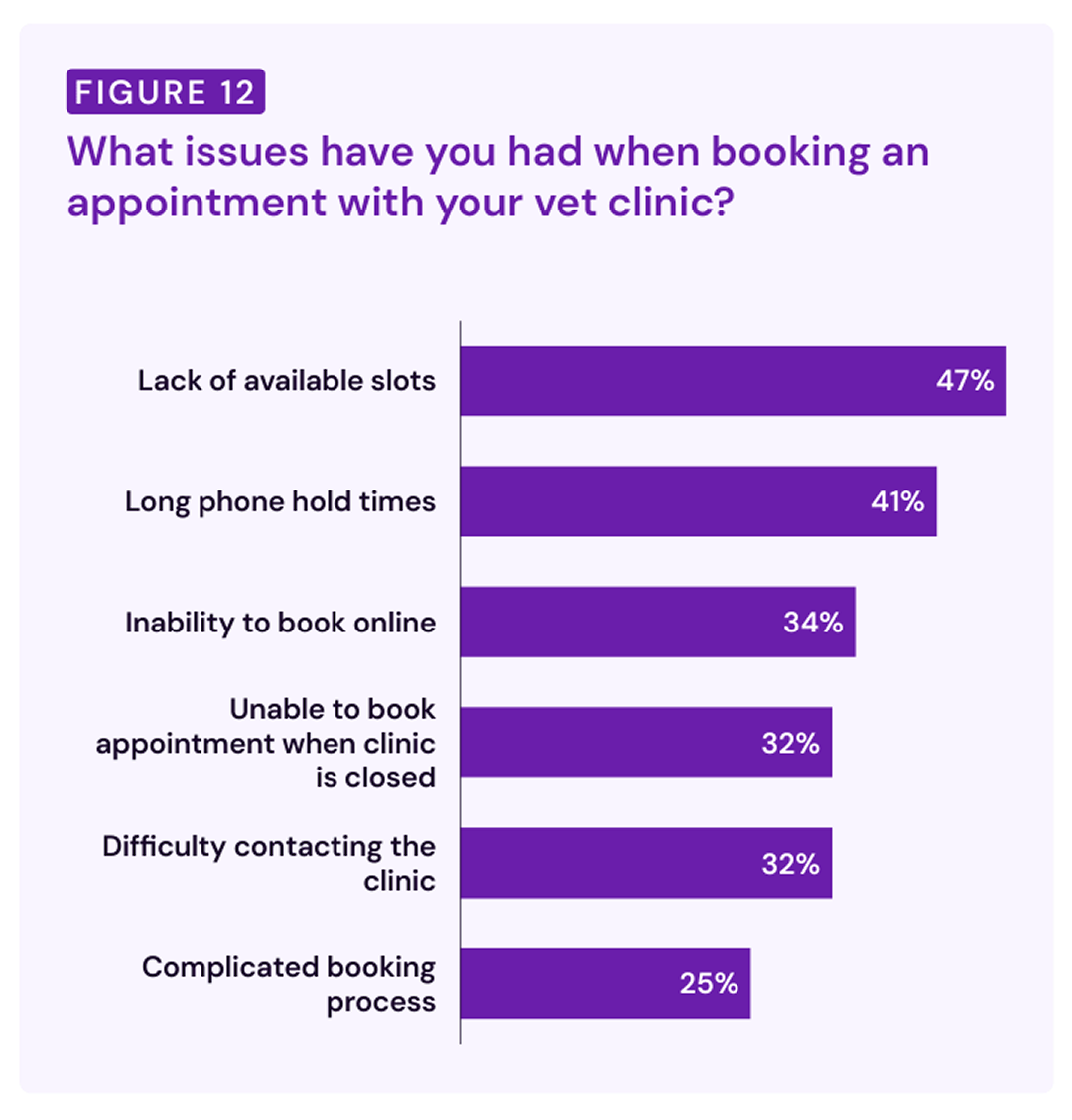
- Lack of available slots (47%): Many owners find it impossible to get a preferred time for their pet.
- Long phone hold times (41%): Waiting on the line for a receptionist is a major pain point for busy owners.
- Inability to book online (34%): A significant number of clients want a digital self-service option that many clinics do not yet provide.
- Unable to book after hours (32%): If a client can only book by calling during business hours, you are forcing them to fit into your schedule rather than yours into theirs.
- Complicated booking processes (25%): If a system is too confusing, clients may give up and look elsewhere.
For over 50 years, Westway Vets has served clients across the northeast of England. But with 15 branches and a growing number of tech-savvy pet parents, the traditional ways of managing appointments — mostly phone calls and a bit of email — were becoming unsustainable.
“We were still relying on the phone for all appointment bookings. Some clients would email, but by the time we got back to them, the appointment slot was usually gone.”
Six months into using Vetstoria, the results they saw have been dramatic.
“Call volume has dropped massively, especially during peak times like when vaccine reminders get sent. Now when a client gets a reminder, they don’t have to call — we give them a link, and they book it themselves. Even at 2 a.m!”
This real-world success proves that digital technology is a vital tool. By removing these barriers, you create a frictionless experience that keeps clients from leaving.
The demographic shift in booking expectations
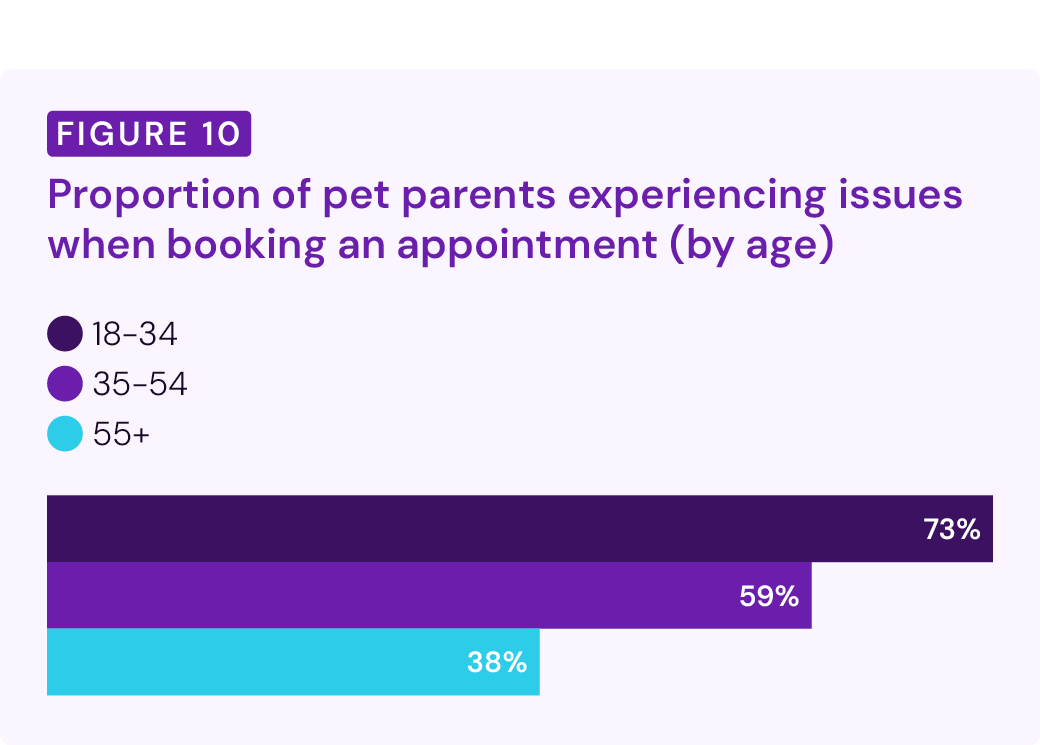
The frustration with booking is even higher among younger pet parents. For instance, 73% of 18–34-year-olds report issues when booking an appointment. This group is “time-poor” and prefers seamless digital interactions over phone calls.
However, the desire for better technology is not limited to the youth. One of our customers, Tom Llewellyn (Partner, Clinical Director and Veterinary Surgeon at Forest Veterinary Clinic), has seen this first-hand. He notes that the appeal of these tools is much broader than many expect:
“We have quite an old client base. Some of them surprise me. We have some 80-year-olds who use Vetstoria’s online booking and love it.”
While their preferences may be slightly “softer” than those of younger owners, many pet parents aged 55+ still believe digital reminders and online access are important. Providing these tools doesn’t just attract new clients; it also rewards the loyalty of your long-term, older clients.
Location also plays a part in these expectations. Urban pet parents are 18 percentage points more likely to have difficulties booking than those in rural areas. Because urban owners often have more nearby alternatives, they are more likely to switch to a practice that offers an easier booking journey.
Why phone-only systems are a risk
While some owners still like calling their vet, only 43% typically prefer using the phone for non-urgent appointments. This means more than half of your clients would prefer a different method.
Relying solely on phone calls creates a “bottleneck” at your front desk. This leads to the long hold times that frustrate 41% of your clients. By providing more ways to book, you can improve satisfaction and protect your practice from losing valuable clients to more modern competitors.
Is your website losing you clients?
Your clinic’s website acts as your digital front door. Our research reports hows that a poor online presence is no longer just a minor issue. Instead, it is a major reason for losing business.
In fact, 83% of pet parents consider a practice website important when they choose a new vet. If your website feels outdated or difficult to use, you are likely losing clients to more modern competitors. Currently, 29% of pet parents have already decided against a specific clinic because of its website. This makes your digital presence a critical pillar of veterinary client retention.
Why a poor website is a “deal-breaker”
The quality of your website directly impacts how much a client trusts your professional skills. For many owners, especially younger ones, a high-quality site is a baseline requirement.
- The age gap: 36% of all pet parents view a poor website as a deal-breaker, but this rises to 47% for those under 35.
- Building credibility: A professional site builds trust and helps your clinic appear in search engine results.
- First impressions: 84% of pet owners in the UK and 81% in Australia use your website to decide if they should register with you.
Why do pet parents leave your site?
When pet parents visit your website, they usually look for specific information. However, many clinic sites fail to provide these basics. This leads to high “bounce” rates as users leave to find a clearer alternative.
The report highlights the top reasons why owners avoid or leave a vet’s website:
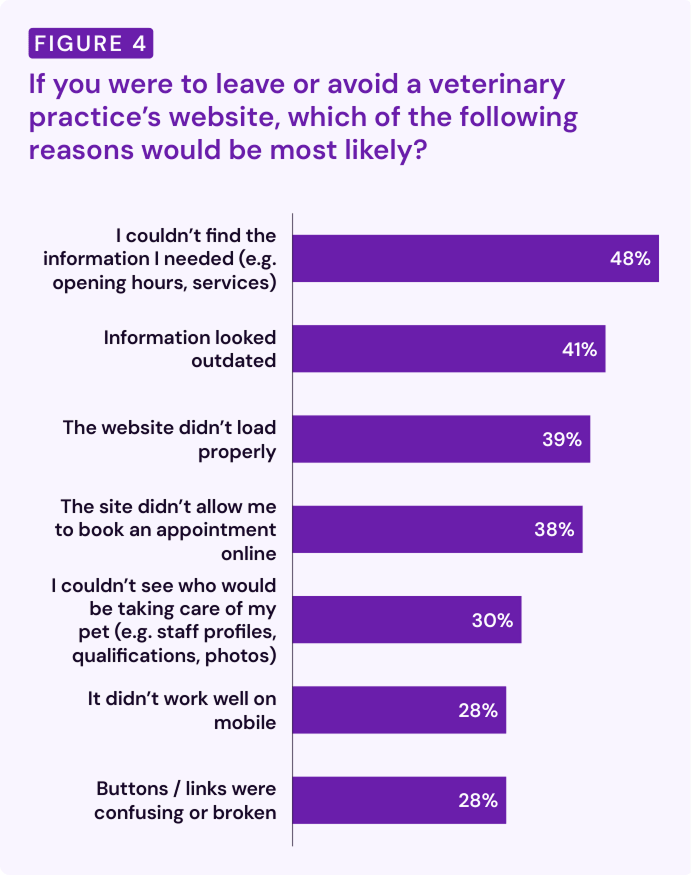
- Missing information (48%): Users cannot find opening hours or available services.
- Outdated content (41%): The information looks old or incorrect.
- Slow loading (39%): The website does not load properly or quickly.
- No online booking (38%): The site does not allow users to schedule an appointment online.
- Missing staff profiles (30%): Clients cannot see who will be taking care of their pet.
- Poor mobile experience (28%): The site does not work well on smartphones.
- Broken links (28%): Buttons or links are confusing or do not work.
Petmania Vet Clinic faced these exact challenges. They had a limited online presence and a high volume of phone calls that strained their nursing and reception teams. They also missed opportunities to capture bookings outside business hours, putting them at risk of losing new clients to competitors.
Since updating their digital approach, their return on investment has been excellent. The team explains:
“Even during quieter periods, we continue to acquire new clients through online bookings. This demonstrates the significant value of Vetstoria, even exceeding the minimum cost of our website. It has consistently proven to be a valuable service with a strong return on investment. Essentially, it’s like having a 24/7 receptionist available to answer basic inquiries.”
Creating a website that keeps clients loyal
A modern website saves time for your team because it handles routine tasks like taking bookings 24/7. Because 28% of owners feel frustrated by sites that fail on mobile, your online presence must be “mobile-first”.
Our research shows that 29% of pet parents have already ruled out a specific clinic simply because they found the website difficult or outdated. You can prevent these “rule-out” decisions by providing clear, mobile-friendly, and easy-to-navigate information. It keeps your existing clients from looking for a better online experience elsewhere.
Forest Vets Clinic believes their website plays a vital role in drawing in new clients.
“Having an online presence is so important, especially where they’re able to look and see, read a bit about you, and read your reviews. This is what makes them click, register their pet and read a bit about the vets. The website helps us sell ourselves.”
They also highlighted that marketing does not always come naturally to medical professionals.
“We’re not very good salesmen, naturally, as vets. It’s hard to get out to people as to what you stand for. And a good website definitely helps us with that.”
Investing in your website is no longer just about aesthetics. It is about creating a frictionless “digital front door” that captures every opportunity, even when your clinic is closed.
How online reviews and trust build loyalty
Trust is the foundation of every successful veterinary relationship. Our research shows that trust is the most important factor when a client chooses a practice. However, digital habits are changing how pet parents decide who to trust. While traditional word-of-mouth still matters, “social proof” through online reviews now dictates veterinary client retention for the modern era.
The power of online reviews
Positive reviews help you acquire new customers and keep existing ones. Younger pet parents rely heavily on these digital signals before they even step into your clinic.
- High engagement: 88% of pet parents under 35 “always” or “often” check reviews before choosing a vet.
- Selection driver: Online reviews are the second most likely reason for choosing a vet (31%), following only personal recommendations (49%).
- Generation gap: Pet parents under 35 are two-and-a-half times more likely to choose a vet based on reviews compared to those aged 55 or over.
- Regional trends: In the UK, 75% of pet owners check reviews, while 72% of Australian pet parents do the same.
Why trust and technology must work together
Trust is the primary reason people choose a practice, followed by location and customer service. Digital technology supports this trust by providing a professional image. For instance, a clear website and positive reviews build your credibility before a client even calls you.
If your digital experience is poor, it can lead to negative reviews. For example, 41% of owners feel frustrated by long phone hold times. These frustrated clients may leave a public complaint, which damages your reputation. By using technology to solve these service issues, you protect the trust you have worked so hard to build.
Building long-term loyalty
Pet parents value a warm and welcoming environment. However, they also want low-friction experiences. Pet owners now rank “good technology”—like online booking and clear websites—as more important than 24/7 hours or low prices.
Because 35% of owners are currently considering a switch, you must prove your value every day. Combining exceptional pet care with streamlined digital tools creates a winning combination that keeps clients loyal for years.
How can your practice be discovered?
Before a pet parent becomes a loyal client, they must be able to find you easily. The 2026 Pet Parent Research Report shows that your digital presence—the combination of online reviews and search engine visibility—is now a top factor in how owners choose a vet.
While word-of-mouth is still the primary way people find a clinic, digital channels are where they go to verify that recommendation or find an alternative. According to our data, these are the top ways pet parents discover their current clinic:
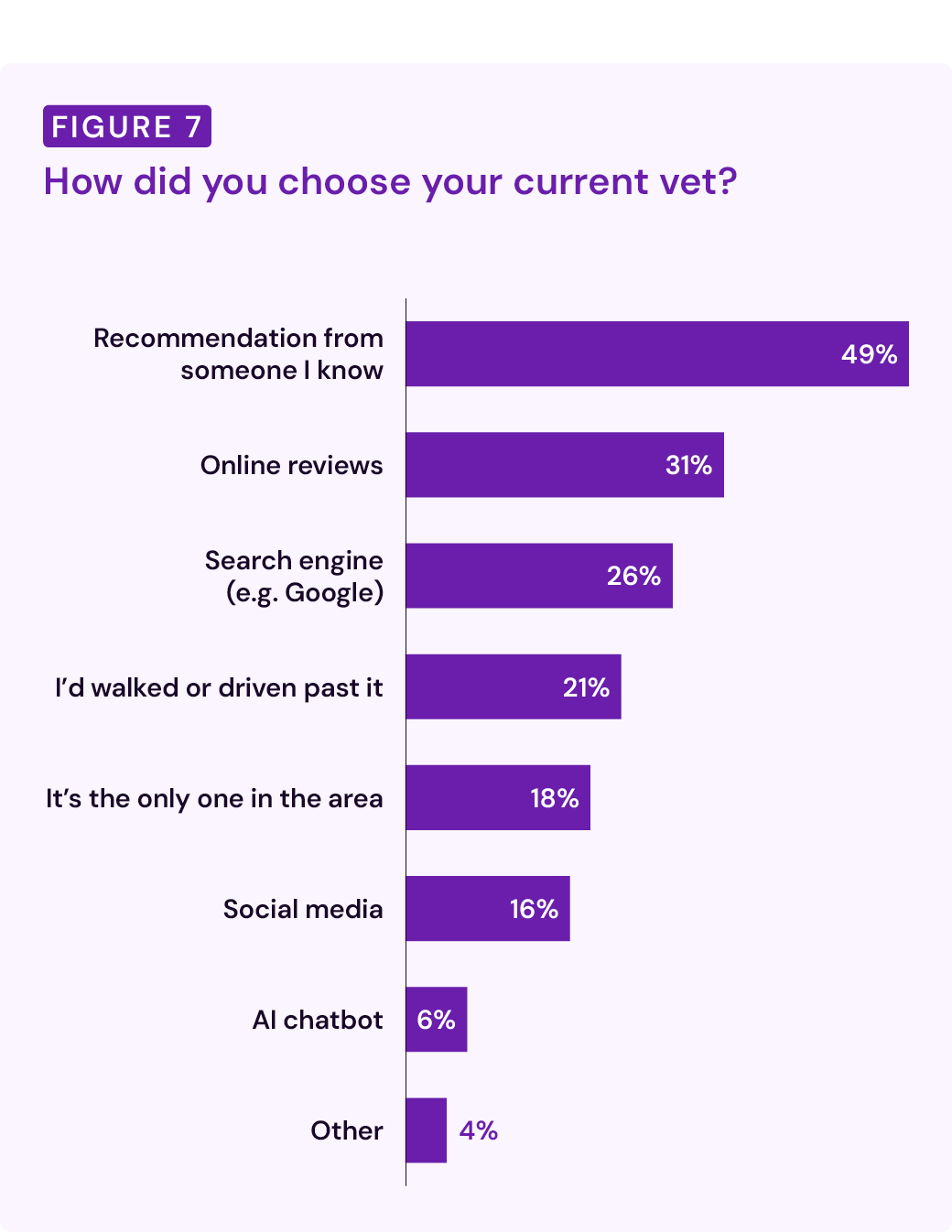
- Personal Recommendations (49%): Word-of-mouth remains the strongest lead source.
- Online Reviews (31%): Nearly a third of owners choose a vet based on what others say online.
- Search Engines (26%): Many owners simply search “vet near me” on Google to find their options.
- Physical Visibility (21%): Passing by the clinic while walking or driving still accounts for one in five new clients.
- Social Media (16%): Platforms like Facebook and Instagram are growing as discovery tools for younger owners.
Because 88% of pet parents under 35 check reviews before making a decision, your digital reputation is your “new” front door. If your clinic does not appear in search results or lacks positive reviews, you are missing out on the most active pet-owning demographic.
Forest Vets Clinic has seen the power of this firsthand. Since updating their site, they have noticed a significant increase in interest, particularly for their specialised services.
“Particularly since we do a bit of exotics work, that has drawn a few clients in, who have registered and booked online. They seem to have done a Google search for a vet for their tortoise and our website comes up. So that’s been quite useful and we’ve had a number of clients.”
By matching your online presence to what clients are actually searching for, you ensure your practice is discovered by the right people at the right time.
What should your clinic implement to improve retention?
Improving veterinary client retention requires a shift from “analogue” habits to digital-first solutions. You can remove the friction that causes churn by implementing these specific tools:
- 24/7 online booking: Give clients the ability to book routine visits at any time. This satisfies the 32% of owners who want to book after your clinic has closed.
- Mobile-optimised presence: Ensure every part of your digital journey works on a smartphone. 28% of owners specifically lose interest when sites do not work well on mobile.
- Transparent information: Clearly list your opening hours, staff profiles, and services. 48% of users will leave your site if they cannot find this basic information quickly.
- Automated engagement: Use technology for non-emergency tasks, such as vaccination reminders. 89% of owners consider these digital reminders important for their experience.
- Post-visit value: Send clear digital summaries after appointments. 85% of clients appreciate these summaries as they reinforce the value of your professional care.
How Vetstoria helps you attract and retain your clients
Vetstoria provides the specific digital tools needed to solve the retention challenges identified in our research. Our platform helps your clinic stay competitive in a “digital-first” market.
- Smart booking integration: Our software links directly to your practice management system. This allows 27% of your clients to self-serve, which reduces the phone hold times that frustrate 41% of pet parents.
- Professional website design: We build websites specifically for the veterinary sector. These sites are mobile-friendly and easy to navigate, preventing the 29% of “rule-out” decisions caused by poor websites.
- Staff empowerment: By automating routine bookings, Vetstoria frees your reception team. Your staff can then focus on high-touch, emotional interactions that build the trust 73% of owners value most.
The team at Westway Vets has seen these benefits across their 15 branches. After seeing how the platform transformed their daily operations and client satisfaction, they shared a powerful endorsement:
“If I had to sum it up, Vetstoria has brought us automation, flexibility, growth—and peace of mind. It’s absolutely something I’d recommend to any practice serious about improving their operations and client experience.”
By choosing a partner that understands the unique needs of the veterinary industry, you don’t just solve a scheduling problem. You create a modern, stress-free environment for both your staff and your clients.
“Our number one priority is being a great place to work. We support our teams so they can focus on delivering the best care to patients and clients. Vetstoria plays a key role in this by reducing stress and making front desk interactions more meaningful—giving receptionists more time to connect with clients and provide thoughtful service. It truly aligns with our mission.”
See How We Turned a Vet Clinic’s Website into a Modern, Pet Owner-Ready Online Experience.

Download the Full 2026 Pet Parent Research Report
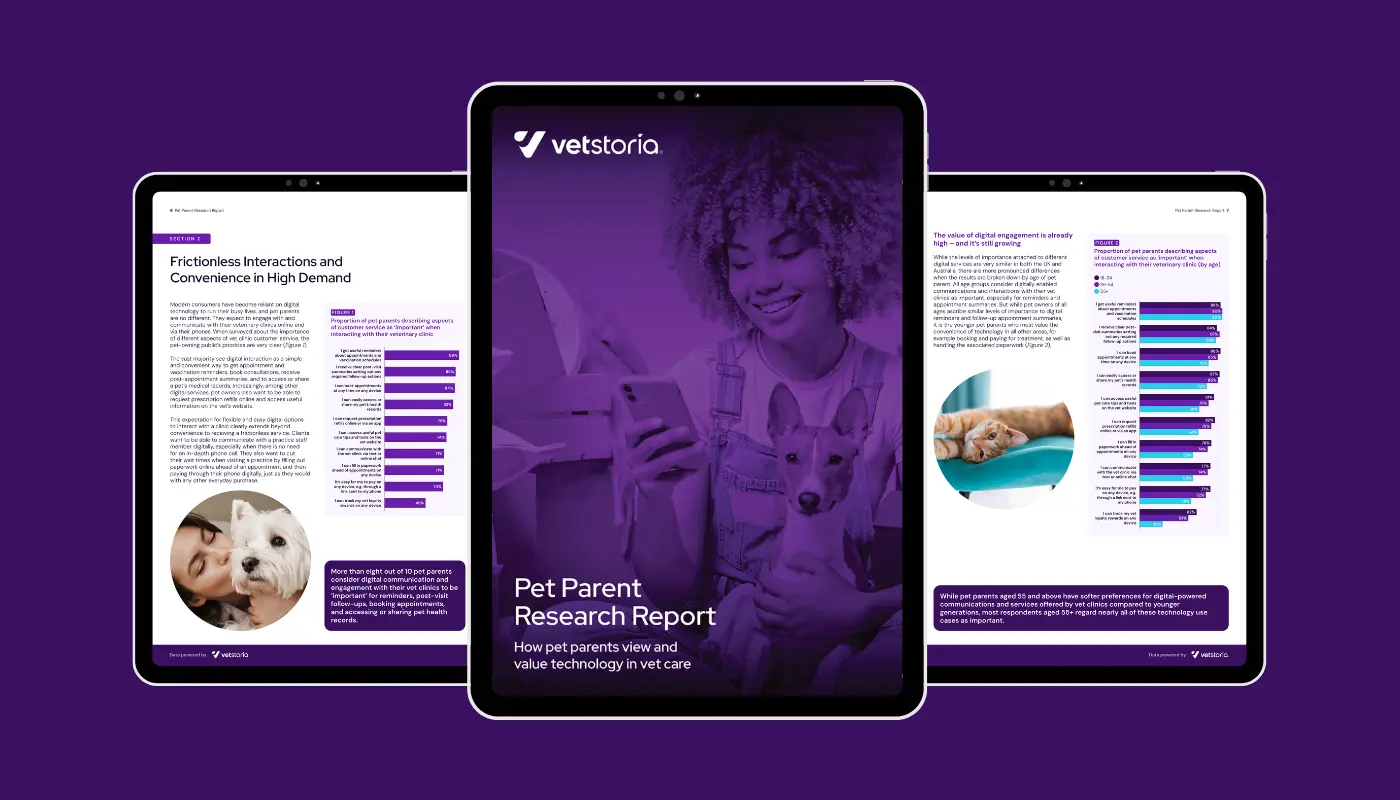
Secure your practice’s future by understanding why 35% of pet parents plan to switch vets this year. Our report provides data-backed insights from 2,000 pet owners to help you improve veterinary client retention.
Download the Full 2026 Pet Parent Research Report here.
Want to future-proof your practice and keep up with today’s digital expectations? Book a demo with us.
Frequently Asked Questions (FAQs)
Who conducted this research, and what was the methodology?
Vetstoria commissioned 7Insights to survey 2,000 pet owners in the UK and Australia. The research explored the growing importance of technology in the pet owner experience, including digital services, clinic websites, pet owner satisfaction, and veterinary pet owner expectations around switching vets.
Why is my clinic’s retention dropping even though our clinical care is excellent?
While only 8% of pet parents leave due to poor clinical care, cost is the primary driver for 32% of people looking to switch. While external economic factors and pricing are often out of your direct control, the “client experience” is not.
Most clients don’t leave just because of price. They leave because of friction in the customer journey, such as long phone hold times or booking difficulties. In fact, if your processes are frustrating, clients are nearly three times more likely to consider a new vet. By focusing on the factors you can control, like a seamless digital experience and building trust, you provide the high-value service that justifies the cost and keeps clients loyal.
How much does a poor website really impact my business?
It is a major “rule-out” factor for new and existing clients. Approximately 29% of pet parents have already decided against a specific clinic because its website was outdated or difficult to use. Furthermore, 36% of all pet parents (and 47% of those under 35) consider a poor website a deal-breaker when choosing a vet.
Does online booking actually improve client loyalty?
Yes, because it removes the top service-related reasons for switching. Since 41% of owners are frustrated by long phone hold times and 32% want to book after the clinic is closed, an online system satisfies these needs directly. Providing this convenience prevents clients from looking for a more “modern” competitor.
Should I stop taking phone calls for appointments?
No, you should not stop taking calls altogether. Many pet parents still value the reassurance of speaking to a professional, especially for urgent care or complex concerns. However, moving routine visits to an online booking system like Vetstoria allows your staff to answer those urgent calls faster and provide better in-person service.
Are older pet parents (55+) comfortable with digital tools?
While their preferences are slightly “softer” than those of younger owners, the majority of pet parents aged 55+ still believe digital reminders, post-visit summaries, and online record access are important. Improving your digital experience benefits your entire client base, not just the younger generations.
How do online reviews affect my retention rates?
Reviews are now a primary form of “social proof.” Because 88% of pet parents under 35 check reviews before making a decision, a poor digital reputation can drive your most valuable clients away. If your booking or communication processes are frustrating, clients are more likely to leave negative reviews that prevent others from joining your practice.
About the author

