
Maximising Efficiency Under Pressure: The Essential Veterinary Triage Checklist
In the fast-paced environment of a veterinary practice, time is the most precious resource we have. When an emergency call comes in or a critical patient arrives at the door, the ability to act swiftly and systematically can quite literally be the difference between life and death.
Triage is designed to maximise veterinary efficiency when prioritising patients and their care during emergencies. It ensures that the most critically ill animals are seen first and given sufficient attention.
To help your team stay calm and focused during these high-pressure moments, we’ve broken down the essential stages of a robust triage process from our veterinary triage checklist.
Why Triage Checklists Are Vital in Veterinary Medicine
There are only so many hours in a workday, and how you utilise them determines your team’s happiness, productivity, and overall well-being. Incorporating checklists into your routine isn’t about “cutting corners”, it’s about:
- Reducing cognitive load: In a crisis, the “thinking” brain can stall. A checklist allows your team to rely on established protocol rather than memory.
- Ensuring team alignment: It ensures that every staff member, from the receptionist to the senior surgeon, is working from the same set of priorities.
- Improving pet owner experience: A calm, systematic approach reassures anxious owners that their pet is in capable hands.
Veterinary Telephone Triage
The triage process often begins before the patient enters the building. A structured approach at this stage allows the clinic to prepare in advance.
- Identify emergency condition: Determine if it is a medical condition or a sudden traumatic event.
- Assess priority level: Use gathered details to gauge the urgency level.
- Check veterinarian availability: Ensure a vet is ready to step in upon arrival.
- Alert the team: Inform the clinical team based on the urgency of the incoming case.
- Advise the client: Remind owners to take caution; pets in pain may bite or scratch.
- Document the conversation: Keep an accurate record of the call for the patient’s file.
- Fill inpatient admission form: Note the animal’s breed, sex, age, and owner details.
- Get the ETA: Obtain the Estimated Time of Arrival to allow for room preparation.
- Set up equipment: Get the necessary gear ready before the patient arrives.
- Prepare consent forms: Have a client consent form ready for immediate signature.
On-Arrival Patient Triage
The first moments after a patient enters the building are vital for rapid observation.
- Initial assessment: Perform a quick survey of the scene and the animal’s state.
- Examine posture: Observe the patient’s position—can they walk?
- Check for trauma: Identify any active bleeding or obvious wounds.
- Obtain a brief history: Ask open-ended questions about the patient’s behaviour and recent events.
- Note clinical details: Quickly check for current medications and previous medical conditions.
- Alert the team: Formally alert the veterinary team of the patient’s arrival.
- Obtain client consent: Secure consent for any urgent treatments immediately.
Patient Examination Triage
Once the patient is in the treatment area, the team needs to perform a rapid assessment of the major body systems.
Respiration (Airway & Breathing)
- Breathing condition: Determine if the patient’s breathing is normal or laboured.
- Mucous membrane colour: Check for cyanosis (blue tint), which requires immediate action.
- Oxygen saturation: If possible, measure haemoglobin oxygen saturation using pulse oximetry.
- Audible airway sounds: Evaluate sounds with and without a stethoscope.
- Immediate intervention: Provide oxygen or intubation if the patient is in distress.
- Respiratory rate: Inspect for shallow or abdominal-effort breathing.
Alertness (Neurological/Disability)
- Responsiveness: Check if the patient is alert and behaving normally.
- Interest in environment: Does the patient show no interest in the environment (depressed: awake but subdued)?
- Delirium: Judge if the patient is awake but has an altered perception.
- Stupor: Identify if the patient is in a sleep state, aroused only by a strong stimulus.
- Coma: Note deep unconsciousness where the patient cannot be roused.
- Ambulatory status: Check the patient’s ability to move.
- Light response: Assess if the patient’s pupils respond to light.
Perfusion (Cardiovascular)
- Mucous membrane colour: Is the patient’s mucous membrane colour pink to a muddy grey or pale (normal).
- Capillary refill time: Note down the CRT to assess peripheral circulation.
- Heart rate: Evaluate if the heart rate is abnormally increased or decreased.
- Pulse deficits: Check for any discrepancies in the patient’s pulse.
- Cardiac workup: Conduct a focused workup and perform an ECG if needed.
- Temperature: State and record the patient’s body temperature.
Download Your Printable Checklist
Don’t rely on memory alone during a crisis. We’ve made this resource available so you can keep it close at hand in your treatment area.
Download the checklist as a printable and keep it with you; we recommend laminating it for your prep room to ensure your team has a clear, repeatable process for every emergency. Download the Checklist here.
Our checklist pack includes:
- Veterinary Triage Checklist
- Veterinary Inpatient Checklist
- Veterinary Hospital Housekeeping Checklist
- Veterinary Receptionist Checklist
- Weekly Reusable Spreadsheet with all 5 Checklists
Beyond the Checklist: Automating Your Practice
While checklists streamline your clinical work, your administrative efficiency is just as critical. This is where Vetstoria helps your practice thrive.
Real Time Online Booking
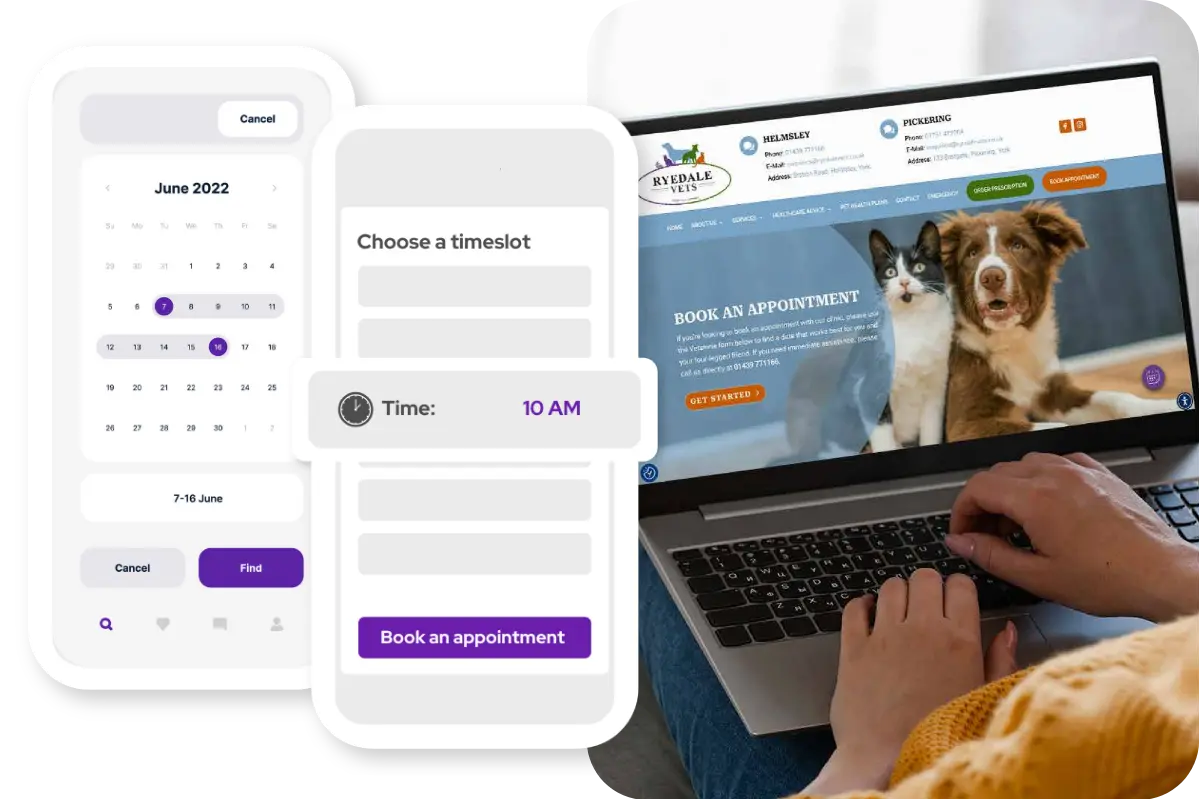
Vetstoria’s real-time online booking platform integrates directly with your Practice Management System (PMS). It allows pet owners to book appointments 24/7, reducing phone traffic and freeing up your receptionists to focus on the clients in the waiting room. Our system uses smart triage triggers to identify emergencies during the booking process, directing owners to call the clinic immediately rather than booking a routine slot.
Professional Veterinary Websites
Your website is your practice’s digital front door. Vetstoria provides professional, SEO-friendly websites designed specifically for the veterinary profession. These sites are built to convert visitors into bookings, featuring mobile-friendly designs and seamless integration with our booking tools to help your practice grow.
Ready to see how automation can transform your practice? Book a demo with us or take an online tour of Vetstoria to see how we can help you reclaim your time and enhance the client experience.
About the author

