

The Essential Veterinary Receptionist Checklist: Elevate Your Client Experience
The reception desk is the engine room of any successful veterinary practice. As the first point of contact, a receptionist’s ability to manage the schedule while providing an empathetic experience for pet owners is vital.
However, with phones ringing, emergencies arriving, and endless paperwork to file, it is easy for small administrative tasks to slip through the cracks. This checklist is designed to free up your time, ensuring you never miss a call and every pet owner leaves with a great experience.
Why Front-Desk Checklists Are Vital
A receptionist's role is a constant balancing act between clinical coordination and customer service. Without a structured workflow, the pressure of "peak times" can lead to booking errors or missed billing.
A structured receptionist checklist helps your practice:
- Maintain consistency: Ensure every client receives the same high standard of service, regardless of how busy the clinic is.
- Reduce stress: Following a set "opening and closing" routine prevents the frantic rush to catch up on emails or banking at the end of a long shift.
- Capture growth: Standardising the new patient sign-up process ensures you never miss vital medical history or marketing data.
General Reception – Before Practice Opens
Setting the stage for a smooth day begins before the first appointment walks through the door.
- Voicemails: Check voicemail messages from the previous day and respond to them.
- Diary management: Fill open appointments, manage cancellations, double bookings, and reschedule as needed.
- Reminders: Send out reminders for both unconfirmed and confirmed appointments.
- Digital enquiries: Check emails and incoming appointments.
- Financials: Check cash flow and banking for the start of the day.
- Communications: Switch off the out-of-hours phone line or answering machine and enable phone lines.
- Clinical prep: Check the surgical list and admissions to ensure paperwork, such as consent forms, is ready for the owner.
- Team update: Update the veterinary team on the appointments for the day.
- Billing: Send out any outstanding patient billing statements.
During and After Practice Hours
Maintain efficiency during the midday rush and ensure a clean handover for the following day.
During Practice Hours
- Feedback: Gather pet-owner feedback at the end of each appointment.
- Filing: File all paperwork, including insurance forms, consent forms, inpatient forms, and lost/found pet records.
- Liaising: Coordinate with wholesale companies on deliveries and with crematorium companies on body collection and the return of ashes.
After Practice Hours
- Schedule review: Double-check the schedule and appointments for the next day.
- Communications: Switch on the out-of-hours phone line or answering machine and disable phone lines.
- Admin completion: Complete all paperwork of the day, such as consent and admission forms.
- Team update: Update the veterinary team with the appointments for the next day.
- Banking: Perform banking at the end of the day.
New Patient Sign-Up
Ensure every new relationship starts with a complete and accurate clinical record.
- Software entry: Create an account in your practice management software.
- Patient charting: Create a new patient chart and enter all details into the system.
- Data capture: Capture medical history, insurance details, and billing information.
- Marketing insights: Ask and document how the owner heard about you—through reviews, referrals, or Google?
Download Your Printable Receptionist Checklist
Reclaim your time and elevate your front-desk operations today.
Download this checklist as a printable and keep it at your reception desk. We recommend laminating it so your team can tick off tasks throughout the shift. Download the Checklist here.
Our checklist pack includes:
- Veterinary Triage Checklist
- Veterinary Inpatient Checklist
- Veterinary Hospital Housekeeping Checklist
- Veterinary Receptionist Checklist
- Weekly Reusable Spreadsheet with all 5 checklists
Streamline Your Front Desk with Vetstoria
While checklists manage your manual tasks, Vetstoria automates your scheduling to truly free up your reception team.

Real-Time Online Booking
The biggest drain on a receptionist's time is the telephone. Vetstoria’s online booking platform allows pet owners to book 24/7, reducing phone traffic. This lets your team focus on the clients standing right in front of them, improving the in-clinic experience.
Professional Veterinary Websites
Give your new patients a great first impression before they even arrive. Vetstoria provides professional, SEO-friendly websites that make it easy for owners to find your clinic and book their first appointment digitally.
Ready to see how a smarter schedule can transform your practice? Book a demo with us or take an online tour to see how we can help you reclaim your time and enhance the client experience.


Veterinary Housekeeping Checklist: Maintaining a Sterile Practice Environment
In any clinical environment, sanitisation is the foundation of patient safety. In a veterinary practice, where patients cannot tell us they feel a draught or notice a spill, maintaining a precise purification process is even more critical.
Proper hygiene isn't just about appearance; it’s about infection control. From the waiting room to the surgery suite, every surface must be treated with clinical rigour to ensure you provide your patients and employees with a truly sanitary environment.
Why Housekeeping Checklists are Vital
Veterinary practices are high-traffic areas prone to organic waste, allergens, and infectious pathogens. Without a systematic approach, small, high-touch areas are easy to overlook.
A structured housekeeping checklist helps your practice:
- Prevent cross-contamination: Standardised protocols for isolation and exam rooms stop the spread of disease.
- Boost client confidence: A spotless, odour-free waiting room immediately signals professional care to pet owners.
- Support staff safety: Providing clear PPE (Personal Protective Equipment) and cleaning guidelines protects your team from chemical residues and zoonotic risks.
Waiting Room Housekeeping
The waiting room is your practice’s first impression. It must remain calm, clutter-free, and safe.
- Owner comfort: Refill hand sanitiser bottles for pet owners.
- Odour control: Spray air fresheners to mask unpleasant odours.
- Temperature: Turn on the air conditioning.
- Front desk: Keep the front desk free of clutter.
- Organisation: Keep the front desk free of clutter and ensure files are alphabetised and easily accessible.
- Floor care: Sweep, mop, and vacuum clean floors.
- Pet toys: Check on pet toys and replace them if worn out.
- Announcements: Update the notice board with the latest announcements.
- Safety & spacing: Space out sitting areas to keep animals calm and ensure safe distancing.
- Dusting: Clean the fan if any dust is present.
- Disinfection: Disinfect floors, tables, the front desk, and pet toys.
- Waste management: Empty the garbage of any food items left out to prevent pets from eating them.
Exam Room Housekeeping
These areas require rapid, effective cleaning between every patient to maintain sterility.
- Safety: Wear gloves before cleaning for your safety.
- Surface cleaning: Clean the exam table, floor, and countertop with disinfectants.
- Chemical residue: Wipe down the exam table to remove any chemical residue.
- Waste: Empty the garbage.
- Equipment: Ensure all required equipment is available and cleaned before each use.
- Patient debris: Remove any hair, toenails, urine, or other waste left after the patient leaves.
- Supplies: Refill paper towels.
- Freshening: Spray air fresheners to avoid bad odour.
- Scales: Clean the weighing scale before and after each patient.
- Accuracy: Check you have the correct patient and the relevant file on the computer.
Patient Isolation Area Housekeeping
Isolation areas require the highest level of rigour to prevent the spread of infectious disease.
- Barrier nursing: Maintain a tub of liquid disinfectant at the door to clean off the bottoms of your shoes or wear shoe covers.
- PPE: Wear alternate scrubs/PPE when handling infectious pets.
- Waste protocol: Keep a segregated trash can.
- Supplies: Check and stock segregated cleaning materials.
- Deep clean: Disinfect the whole room before and after each patient.
- Double bagging: Double-bag trash before removing.
- Surfaces: Wash the walls, cages/kennels, under and behind the cages/kennels, cabinet doors, trash cans, and the entrance/exit door with bleach water, then with a glutaraldehyde chemical.
- Hygiene: Wash hands thoroughly after cleaning the isolation room.
- Feeding: Stock up on new segregated feeding bowls.
Kennel/Cage Housekeeping
A clean kennel is essential for patient recovery and comfort.
- Surfaces: Clean and disinfect the floor, walls, ceiling, and kennel/cage doors.
- Cleaning: Vacuum, mop/steam, and clean inside the kennels/cages.
- Preparation: Wipe and dry the cage before a new patient enters.
- Liners: Add new liners (maybe old newspapers for water absorption).
- Identification: Add new cage/kennel cards and empty name tags after a pet leaves.
- Bedding: Place a clean blanket or towel on the cage floor to keep the animal's fur spotless.
- Hygiene: Wash hands thoroughly after cleaning the cages/kennels.
- Waste: Empty trash cans to remove old food, faeces, and other waste.
Washroom Cleaning
Keeping high-touch public areas clean is vital for overall practice hygiene.
- Touchpoints: Wipe down small, high-touch surfaces.
- Counters: Clean mirrors and countertops.
- Sinks: Clean sink and faucet.
- Dispensers: Clean soap and paper towel dispensers.
- Fixtures: Clean toilet bowl, seat, tank, and flush handle.
- Walls: Wipe down walls, doors, and fixtures.
- Floors: Sweep and mop the washroom floor.
Download Your Printable Housekeeping Checklist
Standardise your cleaning protocols today to ensure total clinical compliance across your practice.
Download the checklist as a printable and keep it in your cleaning supply areas. We recommend laminating these sheets so they can be ticked off daily. Download the Checklist here.
Our checklist pack includes:
- Veterinary Triage Checklist
- Veterinary Inpatient Checklist
- Veterinary Hospital Housekeeping Checklist
- Veterinary Receptionist Checklist
- Weekly Reusable Spreadsheet with all 5 checklists
Maximise Your Efficiency with Vetstoria
While your team keeps the clinic sterile, Vetstoria keeps your schedule running smoothly.
Smart Online Booking
A cluttered schedule can be as overwhelming as a messy clinic. Vetstoria’s online booking platform lets pet owners book 24/7, reducing front-desk chaos and allowing your team to focus on maintaining high clinical standards.
Professional Veterinary Websites
Showcase your commitment to hygiene and safety with a professional, SEO-friendly website. Vetstoria provides custom websites designed for vets, making it easy for clients to see the care and cleanliness your practice provides.
Ready to see how a cleaner schedule can transform your practice? Book a demo with us or take an online tour to see how we can help you reclaim your time.

The Essential Veterinary Inpatient Checklist: Streamlining Admissions and Treatment
Admitting a patient for constant supervision is one of the busiest parts of the day. When a pet needs stay-in treatment, clear communication between your receptionists, technicians, and vets is essential.
Using a formal Veterinary Inpatient Checklist removes the guesswork from the process. It helps your team work more efficiently by standardising every admission, ensuring every pet receives high-quality care without the stress of having to memorise every detail.
Why Inpatient Protocols Matter
Admitting a patient involves dozens of moving parts. Missing a single detail—whether it’s a specific medication allergy or the location of a pet’s favourite blanket—can lead to clinical errors or a poor client experience.
A structured checklist helps your practice:
- Eliminate information silos: Every team member knows exactly what has been done and what is pending.
- Manage client expectations: By following a set protocol for costs, consent, and visiting hours, you build trust with pet owners.
- Prioritise safety: Formalising kennel assignments and nurse-in-charge roles ensures no patient is ever "lost" in a busy ward.
The Admission Process
The admission phase focuses on gathering accurate data and securing informed consent from the pet owner.
Pet-Owner Coordination
- Admission form: Take the pet owner's details on the official admission form.
- Diagnostic planning: Decide which tests will be performed and inform the pet owner.
- Financial transparency: Provide a clear estimate of costs to the pet owner.
- Formal consent: Get the pet owner’s consent and signature on the admission checklist, including the date and time.
- Visitation policy: Provide a patient visiting pass and times to the pet owner if required.
Patient Documentation
- Identity check: Take the patient’s specific details on the admission form.
- Insurance: If applicable, take the pet’s insurance details on the admission form.
- Medication history: Take details of medications that the patient is already on or receiving.
- Personal belongings: Take a record of personal belongings admitted with the pet.
- Baseline health check: Take a record of the pet’s health condition when checking in, including heart rate, temperature, and respiratory rate, etc.
Treatment Management
Once admitted, the focus shifts to clinical execution and ensuring the patient is correctly assigned within the hospital.
Preparation and Assignment
- Housing: Assign an appropriate kennel or isolation room for the patient.
- Clinical leads: Assign a vet and a nurse/technician in charge of their treatment.
- Medication sheets: Provide kennel sheets for medication administration.
- Communication: Ensure the patient’s owner is aware of the prescribed medication in their absence.
Ongoing Clinical Care
- Symptom management: Assess what immediate medication or pain relief the patient requires.
- Treatment plan: Define the treatment plan, including medications, doses, and administration frequency.
- Nutrition: Determine the pet patient's dietary plan, including prescription or life-stage diets and water intake.
- Monitoring: Record patients' condition after vet rounds.
- Surgical prep: Set up equipment for surgery if required.
- Pain scoring: Assess the patient's pain.
Download Your Printable Inpatient Checklist
Standardising your hospital's admission process is the simplest way to reduce clinical risk and improve team morale.
Download the checklist as a printable and keep it in your reception and nursing stations. We recommend laminating copies for use with dry-wipe markers to ensure every admission follows these essential steps. Download the Checklist here.
Our checklist pack includes:
- Veterinary Triage Checklist
- Veterinary Inpatient Checklist
- Veterinary Hospital Housekeeping Checklist
- Veterinary Receptionist Checklist
- Weekly Reusable Spreadsheet with all 5 checklists
Empowering Your Practice with Vetstoria
Efficiency shouldn't stop at the treatment room door. Vetstoria offers digital tools that complement your clinical checklists by streamlining the administrative side of your practice.
Smart Online Booking
A smooth inpatient experience often starts with a well-managed diary. Vetstoria’s online booking platform integrates directly with your PMS, allowing clients to book procedures or consultations 24/7. This reduces phone traffic, giving your reception team more time to handle complex inpatient admissions with the care they deserve.
Professional Veterinary Websites
Your website is your practice's digital front door. Vetstoria provides professional, SEO-friendly websites designed specifically for the veterinary profession, making it easy for clients to find the information they need regarding hospitalisation and care.
Ready to see how automation can transform your practice? Book a demo with us or take an online tour to see how we can help you reclaim your time and enhance the client experience.
Maximising Efficiency Under Pressure: The Essential Veterinary Triage Checklist
In the fast-paced environment of a veterinary practice, time is the most precious resource we have. When an emergency call comes in or a critical patient arrives at the door, the ability to act swiftly and systematically can quite literally be the difference between life and death.
Triage is designed to maximise veterinary efficiency when prioritising patients and their care during emergencies. It ensures that the most critically ill animals are seen first and given sufficient attention.
To help your team stay calm and focused during these high-pressure moments, we’ve broken down the essential stages of a robust triage process from our veterinary triage checklist.
Why Triage Checklists Are Vital in Veterinary Medicine
There are only so many hours in a workday, and how you utilise them determines your team’s happiness, productivity, and overall well-being. Incorporating checklists into your routine isn't about "cutting corners", it's about:
- Reducing cognitive load: In a crisis, the "thinking" brain can stall. A checklist allows your team to rely on established protocol rather than memory.
- Ensuring team alignment: It ensures that every staff member, from the receptionist to the senior surgeon, is working from the same set of priorities.
- Improving pet owner experience: A calm, systematic approach reassures anxious owners that their pet is in capable hands.
Veterinary Telephone Triage
The triage process often begins before the patient enters the building. A structured approach at this stage allows the clinic to prepare in advance.
- Identify emergency condition: Determine if it is a medical condition or a sudden traumatic event.
- Assess priority level: Use gathered details to gauge the urgency level.
- Check veterinarian availability: Ensure a vet is ready to step in upon arrival.
- Alert the team: Inform the clinical team based on the urgency of the incoming case.
- Advise the client: Remind owners to take caution; pets in pain may bite or scratch.
- Document the conversation: Keep an accurate record of the call for the patient’s file.
- Fill inpatient admission form: Note the animal’s breed, sex, age, and owner details.
- Get the ETA: Obtain the Estimated Time of Arrival to allow for room preparation.
- Set up equipment: Get the necessary gear ready before the patient arrives.
- Prepare consent forms: Have a client consent form ready for immediate signature.
On-Arrival Patient Triage
The first moments after a patient enters the building are vital for rapid observation.
- Initial assessment: Perform a quick survey of the scene and the animal's state.
- Examine posture: Observe the patient’s position—can they walk?
- Check for trauma: Identify any active bleeding or obvious wounds.
- Obtain a brief history: Ask open-ended questions about the patient’s behaviour and recent events.
- Note clinical details: Quickly check for current medications and previous medical conditions.
- Alert the team: Formally alert the veterinary team of the patient's arrival.
- Obtain client consent: Secure consent for any urgent treatments immediately.
Patient Examination Triage
Once the patient is in the treatment area, the team needs to perform a rapid assessment of the major body systems.
Respiration (Airway & Breathing)
- Breathing condition: Determine if the patient’s breathing is normal or laboured.
- Mucous membrane colour: Check for cyanosis (blue tint), which requires immediate action.
- Oxygen saturation: If possible, measure haemoglobin oxygen saturation using pulse oximetry.
- Audible airway sounds: Evaluate sounds with and without a stethoscope.
- Immediate intervention: Provide oxygen or intubation if the patient is in distress.
- Respiratory rate: Inspect for shallow or abdominal-effort breathing.
Alertness (Neurological/Disability)
- Responsiveness: Check if the patient is alert and behaving normally.
- Interest in environment: Does the patient show no interest in the environment (depressed: awake but subdued)?
- Delirium: Judge if the patient is awake but has an altered perception.
- Stupor: Identify if the patient is in a sleep state, aroused only by a strong stimulus.
- Coma: Note deep unconsciousness where the patient cannot be roused.
- Ambulatory status: Check the patient's ability to move.
- Light response: Assess if the patient's pupils respond to light.
Perfusion (Cardiovascular)
- Mucous membrane colour: Is the patient’s mucous membrane colour pink to a muddy grey or pale (normal).
- Capillary refill time: Note down the CRT to assess peripheral circulation.
- Heart rate: Evaluate if the heart rate is abnormally increased or decreased.
- Pulse deficits: Check for any discrepancies in the patient's pulse.
- Cardiac workup: Conduct a focused workup and perform an ECG if needed.
- Temperature: State and record the patient’s body temperature.
Download Your Printable Checklist
Don't rely on memory alone during a crisis. We’ve made this resource available so you can keep it close at hand in your treatment area.
Download the checklist as a printable and keep it with you; we recommend laminating it for your prep room to ensure your team has a clear, repeatable process for every emergency. Download the Checklist here.
Our checklist pack includes:
- Veterinary Triage Checklist
- Veterinary Inpatient Checklist
- Veterinary Hospital Housekeeping Checklist
- Veterinary Receptionist Checklist
- Weekly Reusable Spreadsheet with all 5 Checklists
Beyond the Checklist: Automating Your Practice
While checklists streamline your clinical work, your administrative efficiency is just as critical. This is where Vetstoria helps your practice thrive.
Real Time Online Booking
Vetstoria’s real-time online booking platform integrates directly with your Practice Management System (PMS). It allows pet owners to book appointments 24/7, reducing phone traffic and freeing up your receptionists to focus on the clients in the waiting room. Our system uses smart triage triggers to identify emergencies during the booking process, directing owners to call the clinic immediately rather than booking a routine slot.
Professional Veterinary Websites
Your website is your practice's digital front door. Vetstoria provides professional, SEO-friendly websites designed specifically for the veterinary profession. These sites are built to convert visitors into bookings, featuring mobile-friendly designs and seamless integration with our booking tools to help your practice grow.
Ready to see how automation can transform your practice? Book a demo with us or take an online tour of Vetstoria to see how we can help you reclaim your time and enhance the client experience.

Australia Edition: 9 Veterinary Marketing Ideas for March
Looking for fresh marketing ideas to keep pet owners engaged this March? Our ready-to-use veterinary marketing ideas and social media graphics will make your March marketing strategy a breeze, ensuring your clinic is part of every occasion from Polite Pets Month to St. Patrick’s Day.
Download them here!
For our UK and EU readers, check out our blog post on Veterinary Marketing Ideas for March – UK & EU.
Veterinary marketing ideas and social media graphics to use during March:
1. Polite Pets Month: March is dedicated to celebrating and promoting well-trained pets! Help pet owners equip their companions with the manners they need to enjoy happy, safe lives by sharing your best training tips for various types of pets. Be sure to direct your audience to your veterinary website to check out any training services or resources you either offer or recommend.

2. Pet Adoption Month: March is a crucial time to spread awareness about responsible pet adoption and foster care, and to spotlight known animal rescue organisations. Take the opportunity to inform your community about the significance of adopting pets in need of a loving home, and guide them on becoming a pet owner or foster parent. Think about collaborating with a local animal shelter and offering a discount to new pet owners who book your services online, such as spaying and neutering.

Teach pet owners about adopting and fostering pets with our free marketing materials.
3. Poison Prevention Awareness Month: March also presents a perfect opportunity to educate pet owners on the crucial importance of keeping toxic items out of their pets' reach. Highlight the dangers posed by certain foods, plants, and household substances to demonstrate your commitment to their pets' health and help prevent vet emergencies. Make sure you include clear instructions on the steps to take if an emergency occurs.

Teach pet owners about pet poison prevention with our free marketing materials.
4. Professional Pet Sitters Week: The first full week of March (this year, from the 1st to the 7th) is dedicated to celebrating the essential work of pet sitters in caring for our non-human family members. Inform your audience about the advantages of choosing in-home pet care, such as minimising stress for both pets and their owners, and reducing the risk of pets being exposed to common illnesses.

5. International Women’s Day: The 8th of March is a day to celebrate women's achievements globally, raise awareness about gender inequality, and promote action toward universal equality. You can engage your online community in a constructive dialogue by reflecting on the many global contributions women have made—including within veterinary medicine and other fields—and by addressing the systematic challenges women continue to encounter today.

6. International Day of Happiness: 20 March is a day to celebrate worldwide cheer. Share cheerful pictures, videos, or stories of your team, clients, and their pets on your veterinary website and social media platforms—and encourage your online followers to join in! You could also offer advice to pet owners on promoting the happiest lives for their pets through healthy habits, like consistent routines and daily activity and play

7. National Puppy Day: 23 March is for raising awareness about the cruelty of puppy mills and promoting safe adoption from verified pet shelters. Encourage your online community to think about volunteering at local animal shelters or responsibly adopting a puppy. Share guidance on the adoption process for a new furry friend, and provide best practices for giving puppies the happiest life possible. You could also throw in an online booking discount for new pup parents who schedule spaying, neutering, or vaccine appointments with your clinic.

8. Respect Your Cat Day: The 28th of March is a time to celebrate feline friends and family! Connect with cat owners by sharing essential information on maintaining a happy and healthy life for their companions. Emphasise the vital role of preventative care and early detection in effectively treating and managing health conditions, and encourage pet owners to follow through with these routine services by offering a special promotion on online appointment bookings.

9. St. Patrick's Day: Celebrate Irish culture and heritage on 17 March! Join in by sharing pictures of your team and customers wearing green. It's also a great opportunity to remind pet owners to keep toxic substances, such as alcohol, safely away from their pets.

We hope you’ll enjoy using our free marketing ideas and graphics for March. If you need more inspiration, our customisable veterinary content packs are here to help you better market your services throughout the year. Happy celebrating!

8 Veterinary Marketing Ideas for March - UK & EU
Looking for fresh ideas to keep pet owners engaged this March? Our ready-to-use veterinary marketing ideas and social media graphics will make your March marketing strategy a breeze, ensuring your clinic is part of every occasion from World Wildlife Day to Mother's Day. Enjoy!
Download them here!
For our AU & NZ readers, check out our blog post on Veterinary Marketing Ideas for March – AU & NZ.
Boost engagement in March with our free veterinary marketing ideas and social media graphics!
1. World Wildlife Day: Observed annually on 3rd March, this is an important day to promote the need for wildlife protection and understanding. Show your appreciation for the incredible diversity of plant and animal species that make our planet so unique by reminding your online followers about the countless advantages of environmental conservation. Share with your community what this day means to you and your team, and highlight your own conservation efforts on your veterinary website and social media channels.

2. International Women’s Day: The 8th of March is a day to celebrate women's achievements globally, raise awareness about gender inequality, and promote action toward universal equality. You can engage your online community in a constructive dialogue by reflecting on the many global contributions women have made—including within veterinary medicine and other fields—and by addressing the systematic challenges women continue to encounter today.
3. St. Patrick’s Day: Celebrate Irish culture and heritage on 17 March! Join in by sharing pictures of your team and customers wearing green. It's also a great opportunity to remind pet owners to keep toxic substances, such as alcohol, safely away from their pets.
4. Nutrition and Hydration Week: Between 16 and 22 March this year, focus on educating pet owners on the necessity of a healthy lifestyle for their pets, particularly ensuring proper eating and drinking habits. Use social media to inform your followers about the warning signs of pet malnutrition and dehydration, and advise them on the necessary steps to take if their pet is consistently not eating or drinking enough. You could also offer discounts on wellness exams for pet owners who book appointments online.

5. First Day of Spring: Spring officially begins on the 20th of March! Celebrate the new season by engaging your online community: ask pet owners what activities they enjoy doing with their pets in the spring, remind them about the importance of preventive care check-ups, and encourage them to book these routine services on any device without calling.

Promote online booking in the clinic and on your social media with our free marketing materials.
6. International Day of Happiness: 20 March is also a day to celebrate worldwide cheer. Share cheerful pictures, videos, or stories of your team, clients, and their pets on your veterinary website and social media platforms—and encourage your online followers to join in! You could also offer advice to pet owners on promoting the happiest lives for their animals through healthy habits, like consistent routines and daily activity and play.

7. Tick Bite Prevention Week: From the 24th to the 30th of March this year, educate pet owners on social media about the risks associated with tick bites for both humans and pets. Help keep everyone safe from disease by sharing prevention tips for tick encounters and bites, and by promoting up-to-date vaccinations. Consider offering a special incentive (like a 10% discount on pet vaccines for clients who book online) to incentivise pet owners to schedule these important preventative care services with your team.

Teach pet owners about Parasite Prevention with our free marketing materials.
8. Mother’s Day: The 15th of March is an extra special time to celebrate mothers across the country! Remember to wish your social media followers a happy Mother's Day, and shine a spotlight on the wonderful things both human and non-human mothers do for their young. Consider collaborating with a local organisation to help connect prospective pet mothers with a nearby shelter for adoption.

We hope you’ll enjoy using our free marketing ideas and graphics for March. If you need more inspiration, our customisable veterinary content packs are here to help you better market your services throughout the year. Happy celebrating!

The Ultimate Veterinary Marketing Guide: Strategies To Grow Your Practice In 2026

Introduction: Why Marketing Matters For Vet Practices In 2026
As client expectations continue to evolve, today’s veterinary market is more competitive than ever. Veterinary practices must adopt strategic marketing—rather than simply “flyers and Facebook posts”—to grow effectively. With pet ownership rising and clients expecting digital convenience, practices that invest in smart marketing will stand out.
Marketing helps you:
- Attract new customers and drive appointments.
- Differentiate your practice with clear brand and service positioning.
- Increase retention and lifetime value of existing clients.
- Take advantage of online channels (search, social, mobile) where pet owners spend time.
This guide is built to prepare you for veterinary success in 2026. By integrating digital trends, increasing automation, improving the customer experience, and tracking your metrics, your practice can thrive this year and beyond—especially with the help of Vetstoria Websites and Online Booking.
1. Define your brand & positioning
Clarify your unique value proposition: Ask: What does your practice do differently? Specialty services? Extended hours? Online booking? What superior customer experience do you deliver?
Develop your brand voice & visual identity: From logo to tone of voice (friendly, professional, pet-centric) ensure consistency across every touchpoint.
Positioning statement: Example: “At [Practice Name], we provide compassionate, same-day care for your pets, combined with convenient online booking and telehealth, because you deserve peace of mind around the clock.”Align your services with client needs: List your core services, highlight your differentiators (e.g., emergency, multi-pet discount, wellness memberships), and weave those into your brand messaging.
2. Understand your target audience & their journey
Define client personas
Create 2–3 personas. For example:
- Busy pet parents who work full-time, want online booking, and prefer flexible hours.
- Senior pet owners with an older dog/cat, trusts recommendations, and values telehealth.
- New pet owners owning a dog or cat for the first time seeking information and guidance.
Map the client journey
Stages: Awareness → Consideration → Decision → Retention → Advocacy
Use the funnel: at the awareness stage, your potential customer searches “veterinarian near me open now.” At decision time, they compare “online booking vet” with “same-day vet clinic.”
Identify key touchpoints such as website search results, Google Business listing, social proof (reviews), online booking page, follow-up communications.
Understand pain points & motivations:
Pain points: long wait times, difficult scheduling, unclear pricing, anxious pets.
Motivations: a healthy pet, convenience, compassionate staff, value. Tailor your messaging accordingly.
3. Build a high-performance website & online presence
Website UX & mobile optimisation: Ensure your veterinary website is mobile-friendly, loads fast (within 3 seconds), and clearly displays your services, hours, team, and contact/booking options.
Clear calls-to-action (CTA): Make sure ‘Book Now,’ ‘Request Appointment,’ and ‘Contact Us’ are readily visible. For practices using Vetstoria Online Booking, highlight that convenience (e.g., “Book your pet’s visit anytime on your own—24/7”).
Service pages & content structure: Create dedicated pages per service (wellness, dental, surgery, grooming). Use SEO-friendly URLs, meta titles/descriptions, header tags (H1/H2) optimised for keywords like “veterinary dental care for dogs” or “online vet booking in [your city]”.
Online booking integration: Prominently feature your online booking function. Provide a seamless booking experience to reduce friction and increase conversion.
Landing pages for campaigns: For special offers (e.g., “Kitten Wellness Package,” “Senior Pet Checkup Month”), build campaign-specific landing pages to drive from ads/socials.
4. Local SEO & organic search strategy
Google Business profile: Claim and optimise your listing: accurate name, address, hours, services, photos, booking link. Encourage customers to leave reviews.
On-page SEO for local search
- Use “Veterinarian in [City/State]” in titles/meta descriptions.
- Schema markup (LocalBusiness, Veterinarian) helps search engines.
- Embed a Google Map on your site.
- Include service-area pages if you serve multiple suburbs.
Content strategy for search: Publish blog posts around local queries such as “How to choose a vet in [your city]” or “Emergency vet tips [your city].”
Backlink & directory strategy: Submit to local directories, pet blogs, chambers of commerce. Partner with local pet-focused businesses (groomers, pet stores) for cross-links.
Monitor & improve: Use Google Search and analytics to track which keywords you rank for, monitor click-through rates (CTR), and identify pages needing improvement.
5. Paid advertising & conversion tracking
Google Ads: Target high-intent keywords (“vet clinic near me”, “emergency vet Oceanside”). Use geo-targeting and ad extensions (call, location, site link).
Social media ads: Platforms: Facebook/Instagram. Use demographic targeting (pet owners, age, location). Promote offers like “Free New-Client Exam” or “Online Booking Discount.”
Retargeting: Retarget people who visited your site through an ad or organically but did not book—remind them of your services and online booking convenience.
Conversion tracking and attribution: Set up goal tracking (bookings, contact form submissions). Use UTM parameters, Google Analytics, and ad platform conversion tags to measure ROI.
Budgeting & bid strategy: Start with a moderate budget, test messaging, optimise for conversions instead of clicks. Monitor cost per acquisition (CPA) and lifetime value (LTV) of clients to evaluate spend.
6. Content marketing & thought leadership
Blog strategy
Publish helpful, evergreen content:
- “10 Signs Your Dog Needs a Dental Cleaning”
- “Traveling with Pets: How to Prepare”
- “Why Annual Wellness Exams Matter for Cats”
Ensure posts are optimised for keywords, have internal links, high-quality images, and a clear CTA (e.g., “Book your appointment”).
Video content: Create short videos: tour of clinic, meet the team, how to give medication, client testimonials. Host on YouTube and embed on your veterinary website.
Downloadable content / lead magnets: Offer a free PDF guide: “Pet Wellness Checklist” or “First-time Puppy Owner’s Guide.” Use it to capture email addresses for newsletters.
Webinar / live Q&A: Host a virtual “Ask the Vet” session via Facebook Live or Instagram Live addressing common concerns. This helps to build authority and engagement.
Guest blogging and PR: Write for local pet-owner blogs and partner with local media to increase online visibility.
7. Social media & community engagement
Platform selection: Focus on 1–2 platforms where your audience is most active (Instagram, Facebook). Maintain a consistent posting schedule.
Content mix
- Educational posts (how-to, pet care tips)
- Behind-the-scenes (clinic staff, fun pet photos)
- Client spotlights/testimonials
- Promotions & events
Engagement strategy: Respond promptly to comments and messages. Use polls, Q&A stories, and user-generated content (“Share a photo of your pet at our clinic”).
Local community involvement: Share your participation in local pet events, animal shelters, adoption drives. This builds local goodwill and strengthens your brand.
Analytics & optimisation: Track metrics including engagement rate, reach, and clicks to your booking page. Use insights to refine content types and timing.
8. Email / SMS marketing & client retention
Welcome series for new clients: Automate a 3-step email: Welcome → About Us → Book Next Visit. Introduce your team, services, and how to book online via Vetstoria.
Appointment reminders & recalls: Use email/SMS to remind clients of upcoming appointments and schedule follow-ups/recalls for routine care.
Segmented campaigns: Segment by pet type, service last used, age of pet, ownership status. For owners with senior pets, send personalised content. For cat owners only, send cat-specific advice.
Promotions & loyalty programs: Offer exclusive deals via email/SMS: refer a friend, multi-pet discounts, wellness plan enrolment. Encourage repeat visits.
Measure retention metrics: Track open rates, click-throughs, booking rate from campaigns, and customer churn. Improve your messaging and cadence over time with these insights.
9. Online reputation & review management
Monitor review platforms: Track reviews on Google, Facebook, Yelp, commonly used pet-owner forums. Positive reviews boost credibility and SEO.
Encourage reviews: Ask satisfied customers (whether via email, SMS, or at checkout) to leave a review. Provide direct links for convenience.
Respond to reviews: Reply quickly—thank positive reviewers, address concerns in negative ones. This demonstrates your focus on customers and builds trust.
Use feedback internally: Negative reviews often point to process issues (long waits, miscommunication). Use them to improve your operations and client experience.
10. Partnerships, events, and referral programs
Local partnerships: Partner with pet stores, groomers, shelters, trainers. Co-host events, cross-promote services, and display brochures.
Community events and sponsorships: Host open houses, pet health check days, adoption drives. Not only great for marketing, but also building goodwill.
Referral program: Encourage existing customers to refer new ones: “Refer a friend and get $20 off your next visit!” Track these referrals and proactively reward customers.
Influencer engagement: Work with local pet influencers (Instagram pet-owners, bloggers) to showcase your clinic and services.
11. Analytics, KPIs, and continuous improvement
Define key metrics
- New customers per month
- Website traffic and source breakdown
- Online booking conversion rate
- Cost per acquisition (CPA)
- Client retention rate / lifetime value (LTV)
- Review count and average rating.
Analytics tools: Use Google Analytics, Google Search, social media analytics, online booking metrics, and email/SMS platform stats to monitor appointment conversions.
Regular reporting and review: Monthly review of metrics, quarterly deep-dives. Identify top-performing channels as well as underperforming ones, and optimise accordingly.
Testing and iteration: Use A/B testing for ad copy, landing pages, email subject lines. For example: “Book Online Now” vs “Reserve Your Pet’s Visit.”
Adjust strategy based on data: Shift budget towards highest-ROI channels, refine messaging based on client feedback, and update SEO keywords annually.
12. Implementation roadmap: 90-day, 6-month, 12-month plans
0–3 months
- Audit current website, brand, services, and client journey.
- Launch or optimise Google Business listing.
- Configure and promote online booking across channels.
- Begin local SEO foundational work (on-page, keywords, directory listings).
- Create a welcome email series and appointment reminder flow.
- Run one paid test campaign (search or social) to gather baseline data.
4–6 months
- Expand blog content, social media schedule, and lead-magnet creation.
- Introduce a referral program and local partnerships.
- Launch segmented email/SMS campaigns and loyalty offers.
- Increase paid ad budget based on early results, refine messaging.
- Track and respond to online reviews proactively; build review-generation strategy.
7–12 months
- Scale content marketing (videos, webinars).
- Deep dive analytics: refine funnel, identify best acquisition channels, increase retention.
- Host at least one major community/pet event or sponsorship.
- Revise SEO strategy to capture new keywords (2026 trending topics include “telehealth for pets” and “pet wellness subscription plans”).
- Review overall budget and ROI, adjust team responsibilities, consider investing in vet-specific tools like Vetstoria.
13. Budgeting, resources, and team structure
Budget allocation
Typical digital marketing budget for small-to-mid sized vet practice: 3-5 % of annual revenue (adjust based on growth stage).
Allocate roughly:
- 40% website/SEO
- 30% paid ads
- 20% content/social
- 10% local events/partnerships.
Internal vs external resources
Decide what you’ll handle in-house (social posts, emails) vs outsource (paid ads, website updates, SEO). Use agencies or freelancers for specialist tasks.
Tools and platforms
- Vetstoria Websites and Online Booking
- Google Business / Ads / Analytics / Search / Maps
- Social scheduling tool (Buffer/Hootsuite)
- Email/SMS marketing platform
- Review-monitoring software
- CRM or practice management system
Team roles
- Marketing lead (or designate staff) responsible for strategy and budgeting
- Content creator (write blogs, social posts)
- Paid-ads specialist or agency
- Client experience/reviews manager (respond to feedback, monitor reputation)
Summary and next steps
You now have a full roadmap to elevate your veterinary practice marketing in 2026. With the right brand positioning, digital presence, content strategy, and measurement framework, you can attract more customers, retain them longer, and build long-term practice growth.
Here’s what you can do next:
- Select 3–5 key campaigns or initiatives to start now (e.g., “Online Booking Launch,” “New Client Referral Program,” “Blog + SEO Setup”).
- Assign responsibilities and set deadlines (ideally within the next 30 days).
- Build your analytics dashboard and define weekly/monthly check-ins.
- Continue to iterate and refine—effective marketing is not “set-and-forget!”
Vetstoria Online Booking and Veterinary Websites work together by reducing your administrative load and providing clients with 24/7, hassle-free convenience.
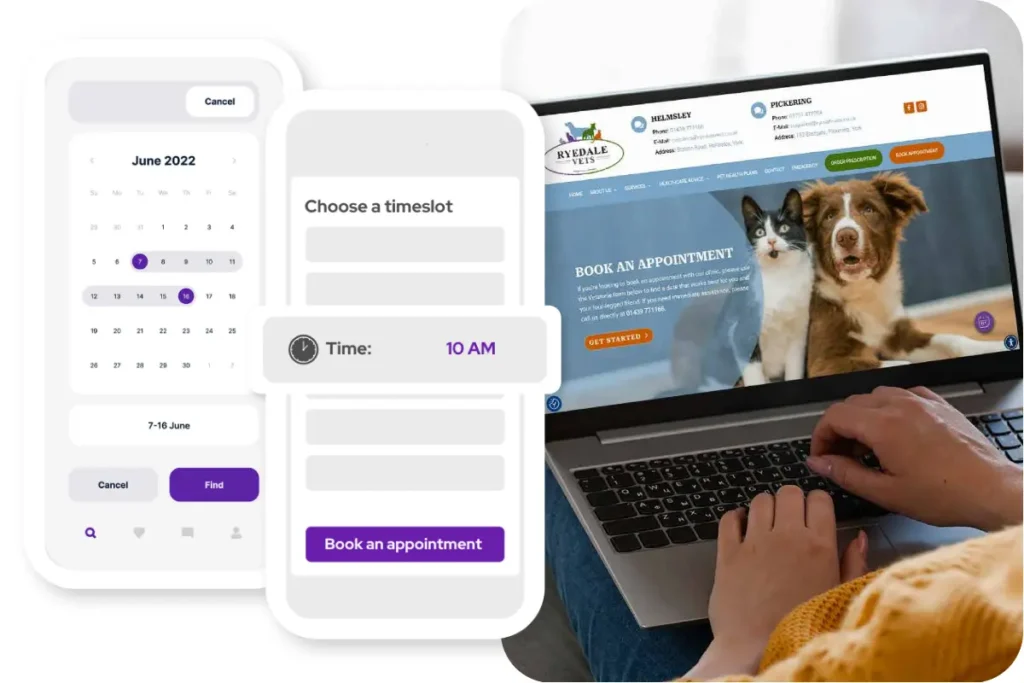
Get a professional website to attract pet owners and effortlessly automate appointment scheduling with Vetstoria. So you can book more clients – without the headaches.

Australia Edition: 10 Veterinary Marketing Ideas for February
From Dog Training Education Month to World Spay Day, use our free veterinary marketing ideas and social media graphics to easily celebrate and honour pet-related holidays throughout the month of February.
Download them here!
For our UK and EU readers, check out our blog post on Veterinary Marketing Ideas for February – UK & EU.
Use these veterinary marketing ideas and social media graphics in February!
1. Dog Training Education Month: February is an ideal time to emphasise to pet owners the value of training for building a stronger relationship with their pets through positive structure, shared responsibility, and deeper bonding. It offers a great chance to offer beneficial training advice and promote any training services your clinic provides or partners with.

2. Cat Health Month: February is also a brilliant opportunity to educate cat owners on the importance of their pets' health, both physical and mental. Since cats are adept at concealing signs of sickness, this month is ideal for promoting preventive care and highlighting any specialised cat services your clinic offers. You may even drive more appointments by offering a discount to clients who book feline services online.

3. World Cancer Day: 4 February is a time to raise awareness about the crucial role of early detection in treating cancer in pets. Use your veterinary website and social media to share best practices for preventive care, emphasising how routine wellness exams and regular check-ups help support effective diagnoses and more powerful treatment plans.

4. International Day of Women and Girls in Science: The 11th of February is recognised as a day to promote equal access and participation for women in science and technology-related fields. Get involved by using your practice's website and social media channels to highlight significant achievements by women in veterinary medicine globally. Encourage online engagement by inviting an open discussion in the comments section of your posts.

5. Valentine’s Day: Spread the love this 14 February by showing appreciation for your community—including your staff, customers, and patients. Connect through social media to show your customers how much you care for them and their pets, and use this opportunity to educate pet owners about the dangers of Valentine's Day chocolates as well as certain flowers.

6. Chinese New Year: Kicking off 17 February this year, the Chinese New Year is a great chance to express extra gratitude towards your veterinary community. Wish everyone good luck and a fresh start to the new year, and consider throwing in an online booking promotion to show even more community appreciation.

7. Love Your Pet Day: The 20th of February is a perfect day to celebrate pets by sharing photos and happy memories of your patients. Invite pet owners and staff members to participate by replying with their own pet photos and stories. Remind your followers about the importance of being actively involved in their pets' health, and that they can easily book routine appointments online anytime.

8. Walk Your Dog Day: Use the 22nd of February to share information about best practices for walking dogs, the benefits of a consistent walking routine, and how extra sniffing time can provide significant mental stimulation.

9. International Dog Biscuit Appreciation Day: Celebrate Biscuit Day on 23 February by posting funny photos of dogs enjoying their favourite biscuits and sharing homemade dog biscuit recipes for owners to try. Encourage your community to join the fun by replying with their own photos and baking successes!

10. World Spay Day: The fourth Tuesday in February (24 February 2026) is to educate pet owners on the life-saving advantages that come with spaying and neutering pets, including a decreased risk of testicular cancer and mammary tumors. If your clinic offers spay/neuter services, remind your clients that they can easily book appointments online without having to call.

We hope you’ll enjoy using our free marketing ideas and graphics for February. Happy celebrating—see you next month! If you’re looking for more inspiration to plan your marketing content, check out our customisable veterinary content packs.
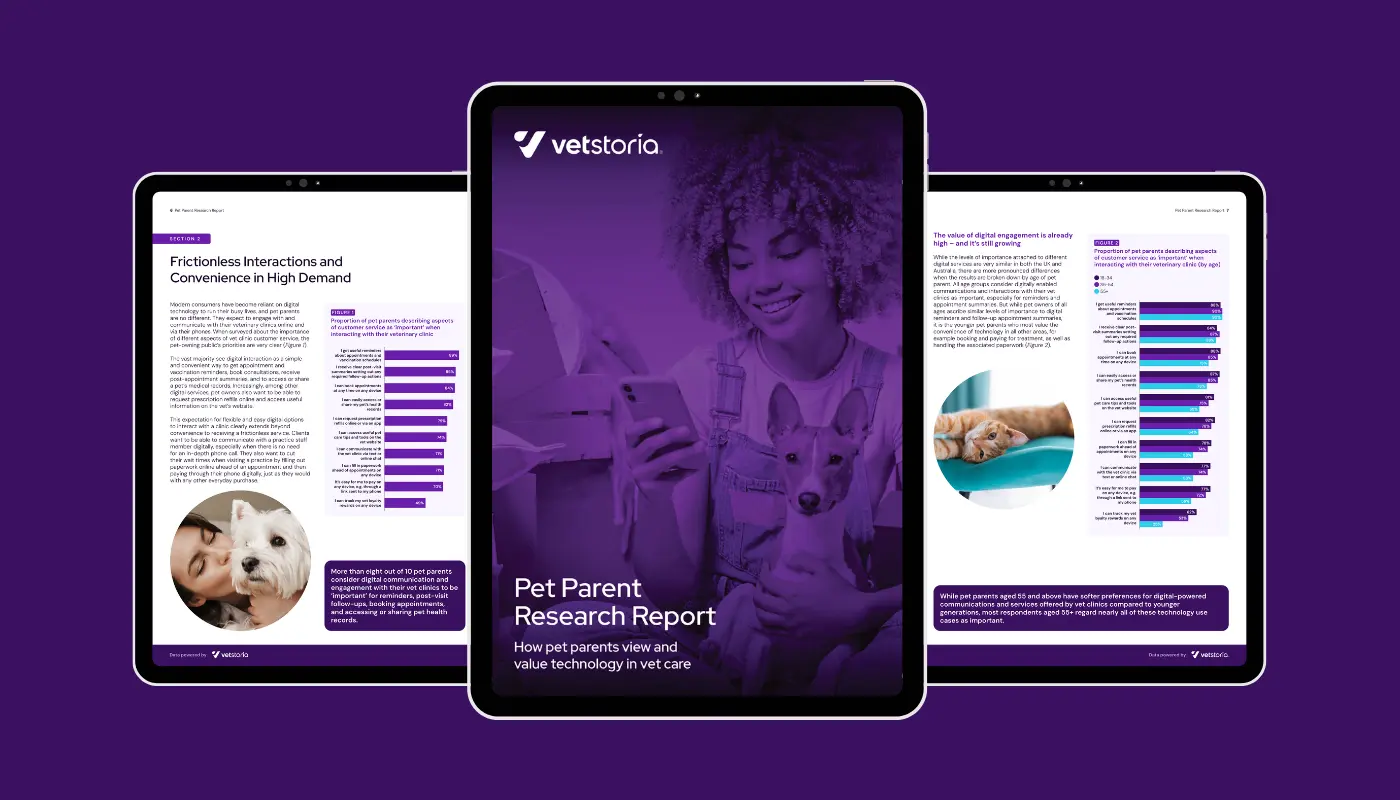
35% of Pet Owners Say They’re Likely to Change Vet in the Next Year, New Vetstoria Research Finds
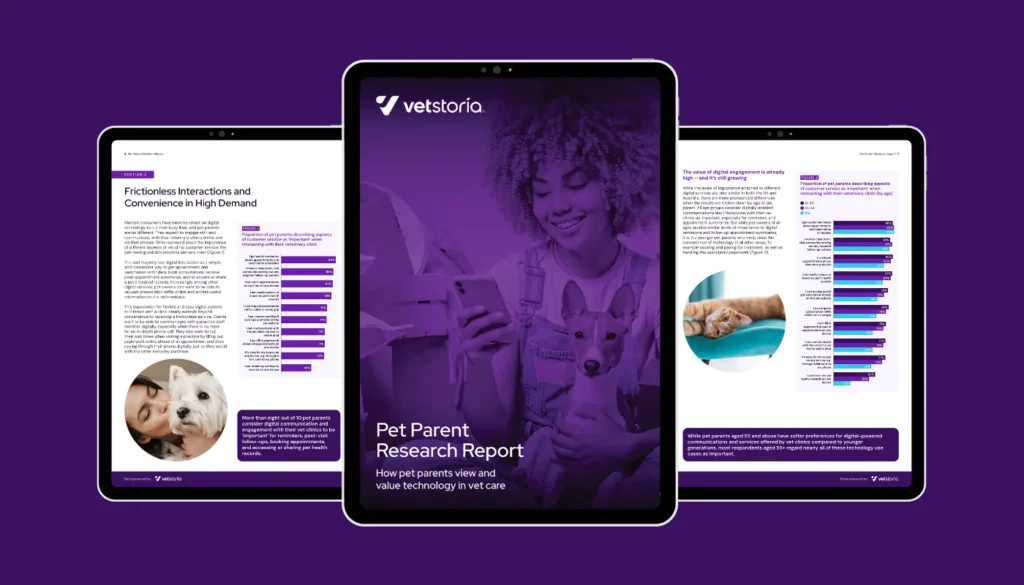
New report highlights the growing role of digital experience in how pet parents choose and stay with veterinary clinics
London, January 12, 2026 — Vetstoria, a Petvisor company, today announced the release of its latest Pet Parent Research Report, conducted in partnership with research consultancy 7Insights, revealing that more than a third (35%) of pet parents say they are likely to change their veterinary clinic in the next year.
Based on a survey of 2,000 pet parents across the UK and Australia, the research explores how expectations around technology — including online booking, communication, and clinic websites — are shaping satisfaction, loyalty, and switching behaviour among today’s pet owners.
The findings suggest that digital experience is playing an increasingly important role in how pet parents evaluate veterinary clinics, particularly among younger and urban audiences.
Key findings from the report include:
- 35% of pet parents say they are likely to change their vet clinic in the next year
- 29% have decided against a clinic because of its website
- 58% have experienced issues when trying to book an appointment
- 34% of those who struggled to book cited the lack of online booking as a key problem
- 73% say they often or always check reviews before choosing a veterinary practice
Commenting on the research, Michael Freeman, Chief Marketing Officer at Petvisor, said:
“Pet parents increasingly expect an easy, digital-first experience from their veterinary providers — just as they do in other aspects of their lives. Clinics that fail to adopt online booking with an optimised website risk losing clients to more tech-savvy clinics.”
The report also explores what pet parents value most when interacting with their veterinary clinic, including:
- 88% value receiving useful reminders about appointments and vaccinations
- 88% say the ability to book appointments anytime, on any device, is important
- 81% want easy access to pet care tips and tools via clinic websites
- 77% value the ability to communicate with their clinic via text or online chat
With pet spending softening in some markets despite sustained levels of pet ownership, the findings provide timely insight into how client expectations are evolving — and the areas clinics may need to focus on to remain competitive.
Download the full Pet Parent Research Report to explore the data in depth, including insights into loyalty drivers, communication preferences, and the digital experiences shaping veterinary care in 2026.
Methodology
The Pet Parent Research Report was commissioned by Vetstoria and conducted by 7Insights. The study surveyed 2,000 pet parents across the UK and Australia to understand expectations around booking, communication, clinic websites, and overall satisfaction with veterinary practices.
Media enquiries:
Lily Webster
lily.webster@petvisor.com
Petvisor

9 Fantastic Veterinary Marketing Ideas for February! - UK & EU
From Spay and Neuter Awareness Month to Love Your Pet Day, use our free veterinary marketing ideas and social media graphics to easily celebrate and honour pet-related holidays throughout the month of February.
Download them here!
For our AU & NZ readers, check out our blog post on Veterinary Marketing Ideas for February – AU & NZ.
Veterinary marketing ideas and social media graphics for February
1. Spay and Neuter Awareness Month: Encourage your community to understand the significance of spaying and neutering pets, from managing overpopulation to enhancing their pets' quality of life. If your clinic provides spay and neuter services, February is a great opportunity to offer a limited-time promotion for clients who book appointments online.
2. Pet Dental Health Month: Keep your February marketing efforts sharp by focusing on dental health. Remind pet owners about the importance of good dental hygiene, including routine dental exams. Provide your online audience with tips on how to brush their pets' teeth, and include a link for easy online booking of your dental services!

Teach pet owners how to keep their pets safe from dental disease with our free marketing materials.
3. Cat Health Month: February is also a brilliant opportunity to educate cat owners on the importance of their pets' health, both physical and mental. Since cats are adept at concealing signs of sickness, this month is ideal for promoting preventive care and highlighting any specialised cat services your clinic offers. You may even drive more appointments by offering a discount to clients who book feline services online.
4. World Cancer Day: 4 February is a time to raise awareness about the crucial role of early detection in treating cancer in pets. Use your veterinary website and social media to share best practices for preventive care, emphasising how routine wellness exams and regular check-ups help support effective diagnoses and more powerful treatment plans.
5. International Day of Women and Girls in Science: The 11th of February is recognised as a day to promote equal access and participation for women in science and technology-related fields. Get involved by using your practice's website and social media channels to highlight significant achievements by women in veterinary medicine globally. Encourage online engagement by inviting an open discussion in the comments section of your posts.
6. Valentine’s Day: Spread the love this 14 February by showing appreciation for your community—including your staff, customers, and patients. Connect through social media to show your customers how much you care for them and their pets, and use this opportunity to educate pet owners about the dangers of Valentine's Day chocolates as well as certain flowers.
7. Chinese New Year: Kicking off 17 February this year, the Chinese New Year is a great chance to express extra gratitude towards your veterinary community. Wish everyone good luck and a fresh start to the new year, and consider throwing in an online booking promotion to show even more community appreciation.
8. Love Your Pet Day: The 20th of February is a perfect day to celebrate pets by sharing photos and happy memories of your patients. Invite pet owners and staff members to participate by replying with their own pet photos and stories. Remind your followers about the importance of being actively involved in their pets' health, and that they can easily book routine appointments online anytime.
9. World Spay Day: The fourth Tuesday in February (24 February 2026) is to educate pet owners on the life-saving advantages that come with spaying and neutering pets, including a decreased risk of testicular cancer and mammary tumors. If your clinic offers spay/neuter services, remind your clients that they can easily book appointments online without having to call.

We hope you’ll enjoy using our free marketing ideas and graphics for February. Happy celebrating—see you next month! If you’re looking for more inspiration to plan your marketing content, check out our customisable veterinary content packs.
