
The Ultimate Veterinary Marketing Guide: Strategies To Grow Your Practice In 2026

Introduction: Why Marketing Matters For Vet Practices In 2026
As client expectations continue to evolve, today’s veterinary market is more competitive than ever. Veterinary practices must adopt strategic marketing—rather than simply “flyers and Facebook posts”—to grow effectively. With pet ownership rising and clients expecting digital convenience, practices that invest in smart marketing will stand out.
Marketing helps you:
- Attract new customers and drive appointments.
- Differentiate your practice with clear brand and service positioning.
- Increase retention and lifetime value of existing clients.
- Take advantage of online channels (search, social, mobile) where pet owners spend time.
This guide is built to prepare you for veterinary success in 2026. By integrating digital trends, increasing automation, improving the customer experience, and tracking your metrics, your practice can thrive this year and beyond—especially with the help of Vetstoria Websites and Online Booking.
1. Define your brand & positioning
Clarify your unique value proposition: Ask: What does your practice do differently? Specialty services? Extended hours? Online booking? What superior customer experience do you deliver?
Develop your brand voice & visual identity: From logo to tone of voice (friendly, professional, pet-centric) ensure consistency across every touchpoint.
Positioning statement: Example: “At [Practice Name], we provide compassionate, same-day care for your pets, combined with convenient online booking and telehealth, because you deserve peace of mind around the clock.”Align your services with client needs: List your core services, highlight your differentiators (e.g., emergency, multi-pet discount, wellness memberships), and weave those into your brand messaging.
2. Understand your target audience & their journey
Define client personas
Create 2–3 personas. For example:
- Busy pet parents who work full-time, want online booking, and prefer flexible hours.
- Senior pet owners with an older dog/cat, trusts recommendations, and values telehealth.
- New pet owners owning a dog or cat for the first time seeking information and guidance.
Map the client journey
Stages: Awareness → Consideration → Decision → Retention → Advocacy
Use the funnel: at the awareness stage, your potential customer searches “veterinarian near me open now.” At decision time, they compare “online booking vet” with “same-day vet clinic.”
Identify key touchpoints such as website search results, Google Business listing, social proof (reviews), online booking page, follow-up communications.
Understand pain points & motivations:
Pain points: long wait times, difficult scheduling, unclear pricing, anxious pets.
Motivations: a healthy pet, convenience, compassionate staff, value. Tailor your messaging accordingly.
3. Build a high-performance website & online presence
Website UX & mobile optimisation: Ensure your veterinary website is mobile-friendly, loads fast (within 3 seconds), and clearly displays your services, hours, team, and contact/booking options.
Clear calls-to-action (CTA): Make sure ‘Book Now,’ ‘Request Appointment,’ and ‘Contact Us’ are readily visible. For practices using Vetstoria Online Booking, highlight that convenience (e.g., “Book your pet’s visit anytime on your own—24/7”).
Service pages & content structure: Create dedicated pages per service (wellness, dental, surgery, grooming). Use SEO-friendly URLs, meta titles/descriptions, header tags (H1/H2) optimised for keywords like “veterinary dental care for dogs” or “online vet booking in [your city]”.
Online booking integration: Prominently feature your online booking function. Provide a seamless booking experience to reduce friction and increase conversion.
Landing pages for campaigns: For special offers (e.g., “Kitten Wellness Package,” “Senior Pet Checkup Month”), build campaign-specific landing pages to drive from ads/socials.
4. Local SEO & organic search strategy
Google Business profile: Claim and optimise your listing: accurate name, address, hours, services, photos, booking link. Encourage customers to leave reviews.
On-page SEO for local search
- Use “Veterinarian in [City/State]” in titles/meta descriptions.
- Schema markup (LocalBusiness, Veterinarian) helps search engines.
- Embed a Google Map on your site.
- Include service-area pages if you serve multiple suburbs.
Content strategy for search: Publish blog posts around local queries such as “How to choose a vet in [your city]” or “Emergency vet tips [your city].”
Backlink & directory strategy: Submit to local directories, pet blogs, chambers of commerce. Partner with local pet-focused businesses (groomers, pet stores) for cross-links.
Monitor & improve: Use Google Search and analytics to track which keywords you rank for, monitor click-through rates (CTR), and identify pages needing improvement.
5. Paid advertising & conversion tracking
Google Ads: Target high-intent keywords (“vet clinic near me”, “emergency vet Oceanside”). Use geo-targeting and ad extensions (call, location, site link).
Social media ads: Platforms: Facebook/Instagram. Use demographic targeting (pet owners, age, location). Promote offers like “Free New-Client Exam” or “Online Booking Discount.”
Retargeting: Retarget people who visited your site through an ad or organically but did not book—remind them of your services and online booking convenience.
Conversion tracking and attribution: Set up goal tracking (bookings, contact form submissions). Use UTM parameters, Google Analytics, and ad platform conversion tags to measure ROI.
Budgeting & bid strategy: Start with a moderate budget, test messaging, optimise for conversions instead of clicks. Monitor cost per acquisition (CPA) and lifetime value (LTV) of clients to evaluate spend.
6. Content marketing & thought leadership
Blog strategy
Publish helpful, evergreen content:
- “10 Signs Your Dog Needs a Dental Cleaning”
- “Traveling with Pets: How to Prepare”
- “Why Annual Wellness Exams Matter for Cats”
Ensure posts are optimised for keywords, have internal links, high-quality images, and a clear CTA (e.g., “Book your appointment”).
Video content: Create short videos: tour of clinic, meet the team, how to give medication, client testimonials. Host on YouTube and embed on your veterinary website.
Downloadable content / lead magnets: Offer a free PDF guide: “Pet Wellness Checklist” or “First-time Puppy Owner’s Guide.” Use it to capture email addresses for newsletters.
Webinar / live Q&A: Host a virtual “Ask the Vet” session via Facebook Live or Instagram Live addressing common concerns. This helps to build authority and engagement.
Guest blogging and PR: Write for local pet-owner blogs and partner with local media to increase online visibility.
7. Social media & community engagement
Platform selection: Focus on 1–2 platforms where your audience is most active (Instagram, Facebook). Maintain a consistent posting schedule.
Content mix
- Educational posts (how-to, pet care tips)
- Behind-the-scenes (clinic staff, fun pet photos)
- Client spotlights/testimonials
- Promotions & events
Engagement strategy: Respond promptly to comments and messages. Use polls, Q&A stories, and user-generated content (“Share a photo of your pet at our clinic”).
Local community involvement: Share your participation in local pet events, animal shelters, adoption drives. This builds local goodwill and strengthens your brand.
Analytics & optimisation: Track metrics including engagement rate, reach, and clicks to your booking page. Use insights to refine content types and timing.
8. Email / SMS marketing & client retention
Welcome series for new clients: Automate a 3-step email: Welcome → About Us → Book Next Visit. Introduce your team, services, and how to book online via Vetstoria.
Appointment reminders & recalls: Use email/SMS to remind clients of upcoming appointments and schedule follow-ups/recalls for routine care.
Segmented campaigns: Segment by pet type, service last used, age of pet, ownership status. For owners with senior pets, send personalised content. For cat owners only, send cat-specific advice.
Promotions & loyalty programs: Offer exclusive deals via email/SMS: refer a friend, multi-pet discounts, wellness plan enrolment. Encourage repeat visits.
Measure retention metrics: Track open rates, click-throughs, booking rate from campaigns, and customer churn. Improve your messaging and cadence over time with these insights.
9. Online reputation & review management
Monitor review platforms: Track reviews on Google, Facebook, Yelp, commonly used pet-owner forums. Positive reviews boost credibility and SEO.
Encourage reviews: Ask satisfied customers (whether via email, SMS, or at checkout) to leave a review. Provide direct links for convenience.
Respond to reviews: Reply quickly—thank positive reviewers, address concerns in negative ones. This demonstrates your focus on customers and builds trust.
Use feedback internally: Negative reviews often point to process issues (long waits, miscommunication). Use them to improve your operations and client experience.
10. Partnerships, events, and referral programs
Local partnerships: Partner with pet stores, groomers, shelters, trainers. Co-host events, cross-promote services, and display brochures.
Community events and sponsorships: Host open houses, pet health check days, adoption drives. Not only great for marketing, but also building goodwill.
Referral program: Encourage existing customers to refer new ones: “Refer a friend and get $20 off your next visit!” Track these referrals and proactively reward customers.
Influencer engagement: Work with local pet influencers (Instagram pet-owners, bloggers) to showcase your clinic and services.
11. Analytics, KPIs, and continuous improvement
Define key metrics
- New customers per month
- Website traffic and source breakdown
- Online booking conversion rate
- Cost per acquisition (CPA)
- Client retention rate / lifetime value (LTV)
- Review count and average rating.
Analytics tools: Use Google Analytics, Google Search, social media analytics, online booking metrics, and email/SMS platform stats to monitor appointment conversions.
Regular reporting and review: Monthly review of metrics, quarterly deep-dives. Identify top-performing channels as well as underperforming ones, and optimise accordingly.
Testing and iteration: Use A/B testing for ad copy, landing pages, email subject lines. For example: “Book Online Now” vs “Reserve Your Pet’s Visit.”
Adjust strategy based on data: Shift budget towards highest-ROI channels, refine messaging based on client feedback, and update SEO keywords annually.
12. Implementation roadmap: 90-day, 6-month, 12-month plans
0–3 months
- Audit current website, brand, services, and client journey.
- Launch or optimise Google Business listing.
- Configure and promote online booking across channels.
- Begin local SEO foundational work (on-page, keywords, directory listings).
- Create a welcome email series and appointment reminder flow.
- Run one paid test campaign (search or social) to gather baseline data.
4–6 months
- Expand blog content, social media schedule, and lead-magnet creation.
- Introduce a referral program and local partnerships.
- Launch segmented email/SMS campaigns and loyalty offers.
- Increase paid ad budget based on early results, refine messaging.
- Track and respond to online reviews proactively; build review-generation strategy.
7–12 months
- Scale content marketing (videos, webinars).
- Deep dive analytics: refine funnel, identify best acquisition channels, increase retention.
- Host at least one major community/pet event or sponsorship.
- Revise SEO strategy to capture new keywords (2026 trending topics include “telehealth for pets” and “pet wellness subscription plans”).
- Review overall budget and ROI, adjust team responsibilities, consider investing in vet-specific tools like Vetstoria.
13. Budgeting, resources, and team structure
Budget allocation
Typical digital marketing budget for small-to-mid sized vet practice: 3-5 % of annual revenue (adjust based on growth stage).
Allocate roughly:
- 40% website/SEO
- 30% paid ads
- 20% content/social
- 10% local events/partnerships.
Internal vs external resources
Decide what you’ll handle in-house (social posts, emails) vs outsource (paid ads, website updates, SEO). Use agencies or freelancers for specialist tasks.
Tools and platforms
- Vetstoria Websites and Online Booking
- Google Business / Ads / Analytics / Search / Maps
- Social scheduling tool (Buffer/Hootsuite)
- Email/SMS marketing platform
- Review-monitoring software
- CRM or practice management system
Team roles
- Marketing lead (or designate staff) responsible for strategy and budgeting
- Content creator (write blogs, social posts)
- Paid-ads specialist or agency
- Client experience/reviews manager (respond to feedback, monitor reputation)
Summary and next steps
You now have a full roadmap to elevate your veterinary practice marketing in 2026. With the right brand positioning, digital presence, content strategy, and measurement framework, you can attract more customers, retain them longer, and build long-term practice growth.
Here’s what you can do next:
- Select 3–5 key campaigns or initiatives to start now (e.g., “Online Booking Launch,” “New Client Referral Program,” “Blog + SEO Setup”).
- Assign responsibilities and set deadlines (ideally within the next 30 days).
- Build your analytics dashboard and define weekly/monthly check-ins.
- Continue to iterate and refine—effective marketing is not “set-and-forget!”
Vetstoria Online Booking and Veterinary Websites work together by reducing your administrative load and providing clients with 24/7, hassle-free convenience.
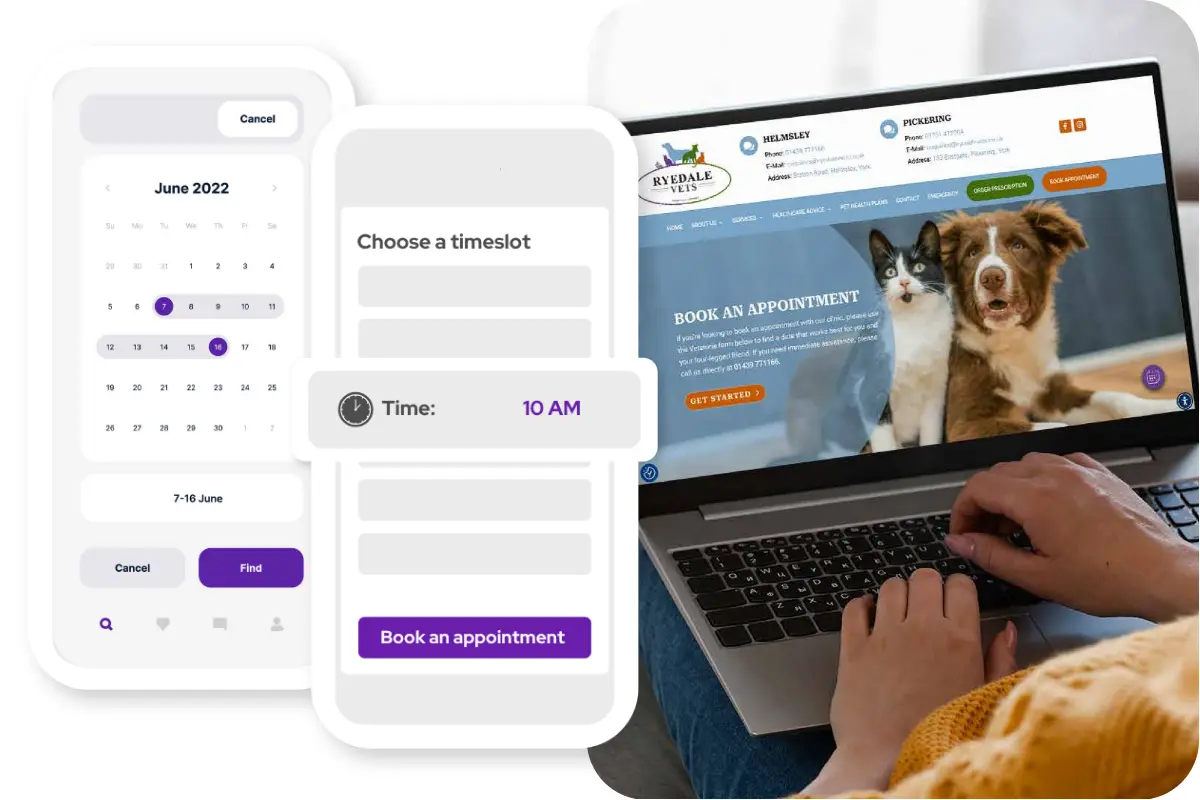
Get a professional website to attract pet owners and effortlessly automate appointment scheduling with Vetstoria. So you can book more clients – without the headaches.
About the author

