

How to Put No-Shows in the Past for Your Veterinary Practice
Table of Contents
- Why do pet owners miss their veterinary appointments?
- What impacts do no-shows have on veterinary clinics?
- How can I prevent no-shows at my veterinary practice?
- How Vetstoria’s online booking makes no-shows no problem!
- Put no-shows in the past for your veterinary practice!
No one enjoys a missed appointment: clients delay the care their pets need, teams waste valuable time, and clinics lose out on revenue. It’s a daily domino effect of problems for veterinary practices, and understanding the root causes of no-shows can seem daunting.
We’re walking you through the real reasons why pet owners miss their veterinary appointments, the many impacts missed appointments have, along with the sure-fire strategies you can use to make no-shows become no problem in no time. Plus, we’ll discuss the powerful tools Vetstoria specifically offers to help no-shows disappear from your clinic—not your clients.
Why do pet owners miss their veterinary appointments?
When pet owners don’t show up to their appointments, sometimes it can feel a bit personal. It’s important to note that while forgetfulness and poor planning can often be the culprits of no-shows, other factors like lack of transportation and sudden emergencies can cause clients to miss their appointments to no fault of their own. We’ve put together a list of the reasons why appointments are missed so you can stay in the know:
Forgetting the Appointment: Pet owners are people, and people are often busy. Sometimes it can be as simple as a client failing to set or receive a reminder that causes them to forget they’ve booked an appointment with you, or their schedule became busier than expected.
Lack of Transportation: Not everyone has reliable means to easily get from place to place. Pet owners who don’t have consistent transportation they can count on are far more likely to not make it to their appointments.
Concerns With Cost: Sometimes it all comes down to money, or the lack of. Pet parents who are more worried about the financial burdens of pet care will often skip the veterinary appointments they’ve booked, or look for a cheaper option elsewhere.
Anxiety and Stress: We’ve all seen a nervous pet in the veterinary clinic, but their owners can be just as anxious. When a client feels worried or stressed about their veterinary appointment, they’re likely to cancel it at the last minute or completely skip it altogether without warning.
Poor Communication: Clients can only make it to the appointments they’re reminded about, and missed appointments can be the direct result of communication breakdowns from the clinic. No-shows can also happen when a pet owner meant to cancel or reschedule their visit, but never communicated that to the veterinary team.
Inconvenient Scheduling: When a pet owner only has a few available appointment slots to choose from, it might force them to book a time that isn’t truly convenient for their schedule. Even if they’ve confirmed their appointment with you, their scheduling conflicts may lead to them not showing up.
Emergency Situations: Not hearing from a pet owner before they miss their appointment can be the result of unplanned events or emergencies. Even if the client has already confirmed their visit and seems to be looking forward to your pet care, there’s always a chance they’ll have to unexpectedly miss it at the last minute.
Changes in Pet Health: We can’t always know exactly how a pet is feeling, and sometimes an issue that once seemed highly concerning turns out to be nothing to worry about. When a pet owner sees that their pet’s condition has improved, it may make them believe that the appointment they’ve booked at your clinic is no longer needed.
Perceived Unimportance: Unfortunately, not every pet owner is an active participant in their pet’s health journey. Certain clients of yours may not realise and understand the importance of preventive care and the benefits of taking their pets in for regular check-ups, leading to them missing or skipping their routine visits.
Negative Experiences: If a pet owner has a poor time at a veterinary practice, it can prevent them from returning for future pet care. They may believe that bad communication from the veterinary team, for example, is a reflection of the care being provided to their pet, and be discouraged from coming back without giving any notice.
Lack of Team Trust: Similar to how a poor experience can prevent pet parents from returning for more care, a client may not come back to a clinic if they don’t have trust and confidence in the veterinary team. Inconsistencies or not having an open dialogue with the staff can put clients on the fence about choosing that clinic for care, and cause them to stop showing up for their appointments.
Scheduling Errors: It’s certainly not always on the client when an appointment is missed. Mistakes in the veterinary practice’s scheduling process can cause missed appointments, or create a poor experience—like a double-booked appointment—that prevents a client from wanting to show up in the future.
What impacts do no-shows have on veterinary clinics?
Missed appointments are missed opportunities for quality care and clinic revenue, but they can also negatively affect your practice's overall efficiency and risk you losing out on loyal pet owners. Knowing the specifics behind these negative impacts will help you understand the importance of preventing missed appointments in the first place:
Delayed Health Journeys: Pets need regular veterinary visits not only to stay healthy, but also to ensure early detection and management of any health-related issues. When a client misses their pet’s appointment, it can result in delayed diagnosis and treatments that put the pet’s health at greater risk.
Reduced Team Efficiency: No-shows are no walk in the park for your veterinary team. While sometimes a missed appointment can mean a much-needed break, no-shows disrupt your staff’s workflow and cause them to scramble as they’re forced to figure out next steps. These inefficiencies can decrease your team’s overall productivity and morale, ultimately risking burnout.
Lost Clinic Income: More than losing team productivity, missed appointments lose valuable revenue for your veterinary practice. Each appointment slot you’ve set up is designed to generate income while providing excellent pet care, neither of which are possible when pet owners don’t show up for their visits. Over time, no-shows can seriously impact the clinic’s financial health.
Diminished Client Relationships: When missed appointments happen more and more, it can strain the relationship between pet owners and veterinary teams. Frequent no-shows can lead to a lack of trust in clients and reduced satisfaction for your team, which can affect client retention and referrals.
How can I prevent no-shows at my veterinary practice?
Add a Reminder System: If clients are actively reminded about their appointments at your clinic, they’ll be more likely to come in for the services they've booked. You can keep pet owners on track by sending them automated reminders through the convenience of a phone call, email, or SMS without interrupting your busy routine.
Provide Flexible Scheduling: When pet parents have an easy way to schedule the services they need on their own time, they’ll be more likely to show up for their appointments. Offer clients a way to book online so they can set up appointments whenever they need to and wherever they are without having to give your clinic a call.
Request Pre-Appointment Payments: Capturing pre-appointment deposits ensures that clients are financially committed to their appointments, reducing the likelihood of a pet owner not showing up for their visit. This also helps secure your revenue in case they don’t make it to their appointment.
Communicate Everything Clearly: Efficiency is in the details. Make sure your appointment instructions are highly detailed and well-written so pet owners know exactly what to do and what to expect every time they book a visit.
Educate Your Clients: Make the importance of regular veterinary visits clear to pet owners by using things like blogs, newsletters, and in-clinic materials to spread the facts and raise awareness. Providing your clients with transparency and education can create a stronger community for your clinic and lead to more responsible pet owners booking your services.
Address Transportation Issues: Consider partnering with a pet transport service to help clients who face transportation challenges. This provides an easier way for these pet owners to keep their pets’ health journeys on course without the risk of missing their appointments.
Offer Financial Assistance: At the end of the day, veterinary clinics are businesses, and you can only provide the care that pet owners can pay for. That’s why it’s important to be transparent about the associated veterinary costs, and offer payment plans to alleviate financial concerns for pet parents. Being up front and honest will let your clients know what to expect from their appointments and prevent them from booking services they can’t afford.
Reduce Anxiety and Stress: Just like your veterinary team, pet owners have a lot on their minds. Help your clients feel less overwhelmed by providing clear pre-visit instructions and setting their expectations, along with in-clinic comfort that steadies their nerves. A detailed process and calm environment will encourage pet owners to follow through with their appointments more often.
Handle Emergencies Efficiently: Emergencies can happen at any time, so it’s important for your clients to know that your veterinary team is always prepared. Create clear policies for emergency situations in your clinic that give pet owners peace of mind and trust in your team, and provide emergency contact information so clients know what to do and who to reach out to in unexpected situations. This will further strengthen your relationships with pet owners and keep them coming back.
Promote Positive Experiences: Keep your quality of care consistent and professional to instil trust and improve client satisfaction. It’s a good idea to regularly seek feedback from pet parents to make sure they’re happy with the services being provided to their pets, and to know which processes in your clinic need improvements.
Ensure Accurate Scheduling: Double-booked appointments and scheduling errors can significantly slow your team down and scare clients off. Be sure to train your staff and use reliable scheduling software to avoid errors and keep things running smoothly. An accurate scheduling process will help promote more positive experiences for pet owners more frequently.
Vetstoria’s online booking makes no-shows no problem!
Vetstoria has the veterinary-specific solution to make your appointment management easier and more efficient than ever before. Our appointment scheduling platform can help you reduce no-shows, enhance your team’s productivity, and ultimately ensure pets get the timely care they need without delay. Here's how:
Accurate Appointment Scheduling
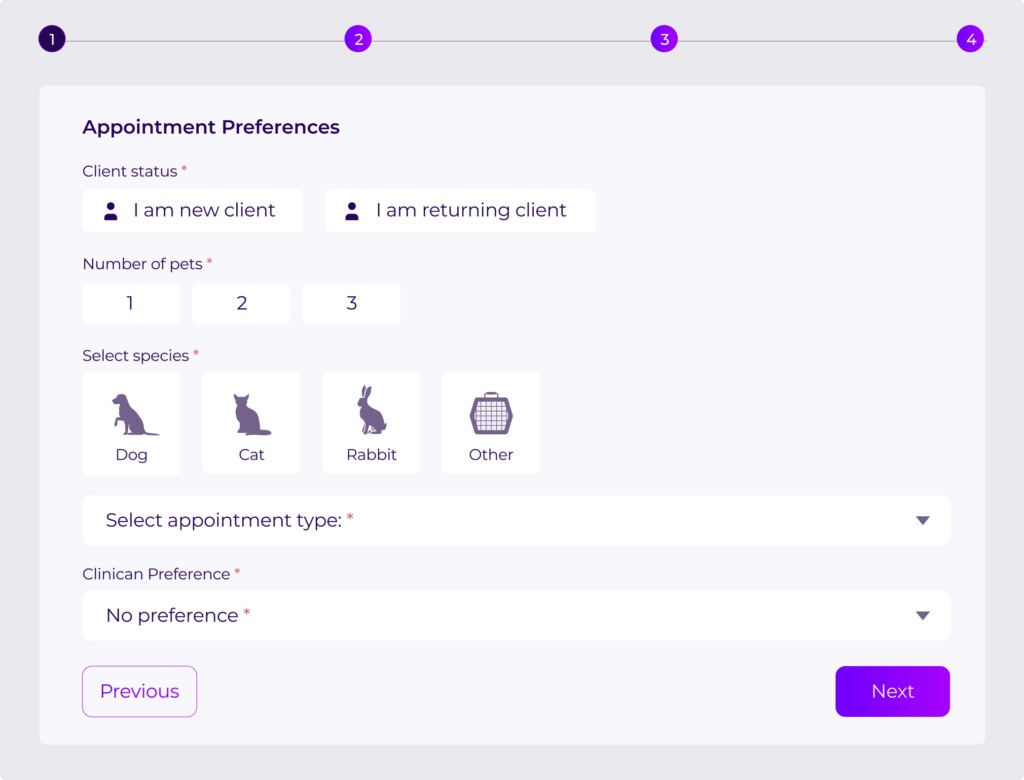
Vetstoria is equipped with real-time booking, which means pet owners will only see the appointment slots that are available to select in your practice management system at that specific moment, rather than falsely seeing what was available to book five minutes ago. This ensures in-the-moment accuracy to prevent scheduling nightmares like double-booked appointments, which can deter clients from returning for more pet care. With an error-free and user-friendly platform for pet owners to book your services with, you’ll create an effortless veterinary experience that encourages them to keep showing up for their appointments. Just ask Pennard Vets, who saw a 93% pet owner satisfaction rate through the convenience of Vetstoria! Plus, with more appointment slots accurately filled and fewer no-shows, you’ll keep your staff efficient while maximising your potential for earnings.
Out-of-Hours Booking
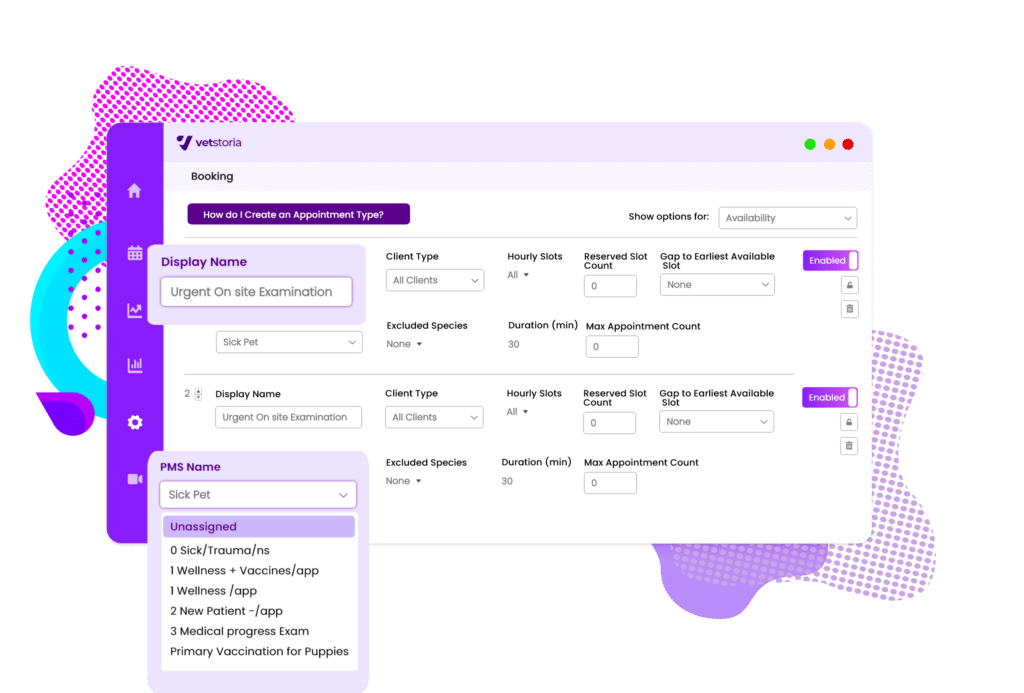
Vetstoria lets clients schedule appointments anytime, anywhere, and on any device without having to make unnecessary calls or visits to your clinic. Rather than stopping what you’re doing or putting pet parents on hold, our platform offers 24/7 online appointment scheduling for clients to book your services on their own time—not yours. This keeps your front desk open after hours, accommodating pet owners who have busier schedules while your team gets some well-deserved rest. Accessibility like this helps to reinforce your practice as the preferred option for pet care, all while decreasing missed appointments and increasing your revenue. Plus, our platform is proven to help promote a healthy-work life balance, like how Hilltop Vets booked over 35% of their appointments after hours while their staff managed to stay equally focused on their professional and personal lives.
Veterinary Payments
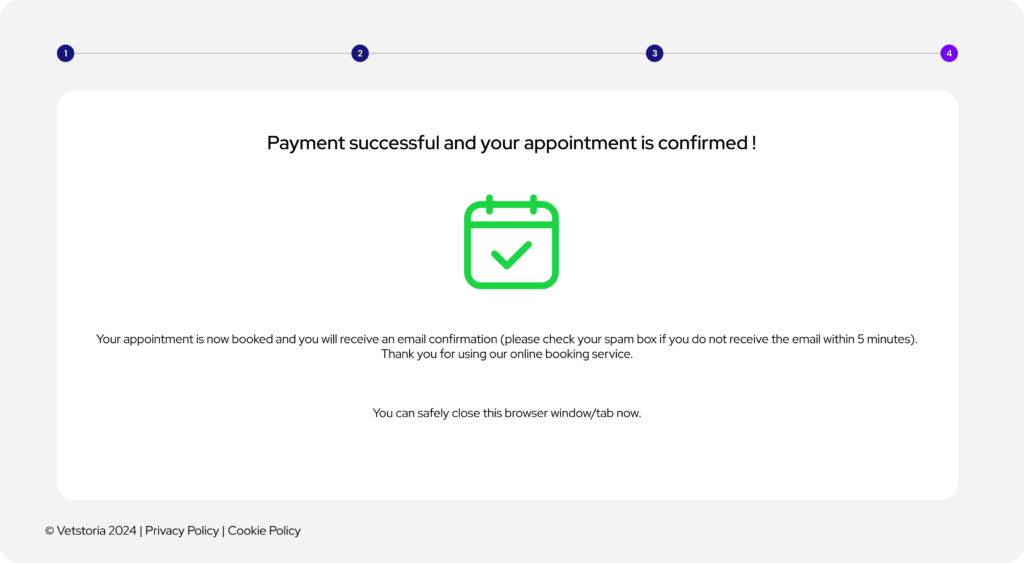
Sometimes the in-clinic checkout process can be long and chaotic, providing a poor experience that prevents pet parents from coming back. With Vetstoria Pay, you’ll make checkout a breeze and reduce no-shows for your practice by requesting pre-appointment deposits or full payments from pet owners while they book online. This is especially useful for getting ahead of missed appointments and preventing last-minute cancellations from more risky clients, helping you secure your pay and keep your revenue on track. Not only that, but you’ll also create a smoother payment experience for everyone while saving your clinic money with our competitive rates on transaction fees!* Whether a new or returning pet owner is booking a consultation or a surgery, our veterinary payment tool enhances your clinic experience while providing the peace of mind you need for each and every transaction.
*Competitive rates and single payment provider or in-clinic and online transactions may vary based on payment provider and region.
Automated Veterinary Reminders
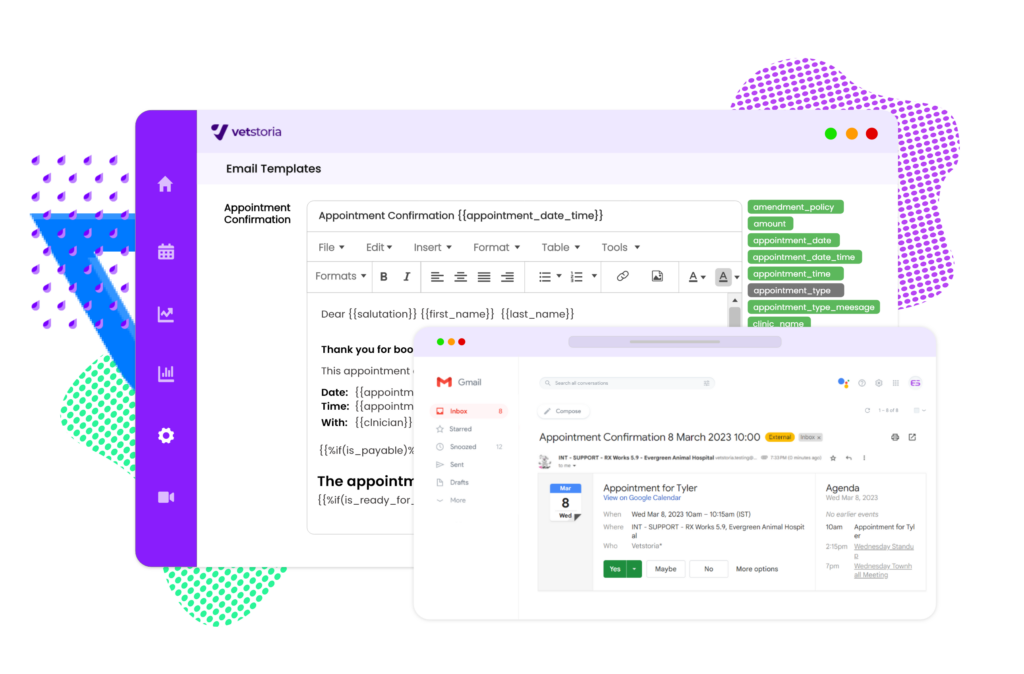
What better way to keep pet owners and health journeys on track than through the simplicity of automated appointment reminders—Vetstoria’s veterinary email reminders do just that by automatically emailing clients about their pets’ appointments well before they’re scheduled to come in, giving them enough time to prepare and follow any pre-visit instructions. You can customise your reminders to make them clear and concise by including things like the date, time, and location of the appointment without manually relaying this information in a repetitive phone call. Plus, our reminders provide clients with an easy link to confirm or make changes to their appointments in advance of their visits.
Put no-shows in the past for your veterinary practice!
From the simplicity of forgetfulness to the complications of poor communication, pet owners can end up missing their veterinary appointments for a number of reasons. Regardless of why, the negative impacts are clear: pets don’t get the care they need when they need it, veterinary teams become less productive, clinics lose out on valuable revenue, and client relationships can be put in jeopardy. That’s why it’s important to stay ahead of missed appointments at your veterinary practice, and use the right strategies coupled with the right tools to make no-shows no problem.
If your practice is experiencing a noticeable rate of missed appointments, it’s crucial to address the issue immediately—and Vetstoria can help. Our veterinary-specific booking solution equips your team with everything they need to stay efficient, providing staff members and pet owners with key appointment management features like automated reminders, customisable out-of-hours booking, accurate appointment scheduling, and powerful, cost-effective payment software. Start making no-show appointments disappear—not your clients—by scheduling a free chat with a Vetstoria product expert today! You’ll see what we can make possible for your specific practice, with no pressure to sign up.

Exploring the World of Veterinary Medicine: Key Facts and Trends of 2023 for veterinarians in the UK and Globally
This blog offers a detailed analysis of the latest statistics and data from 2023 that sheds light on the state of the veterinary profession. From exploring the dynamics of job growth and stress levels in veterinarians to examining the impact of technological advancements and shifts in pet ownership trends, this blog provides a holistic view of the veterinary landscape. Whether you're a practicing veterinarian, a veterinary student, or simply an enthusiast in animal healthcare, read through these data and trends from 2023 that will enrich your understanding and perspective of this ever-evolving field.
Read our latest blog on Veterinary Industry Trends 2026: What 2,000 Pet Owners Told Us.
Pet ownership in the UK and globally
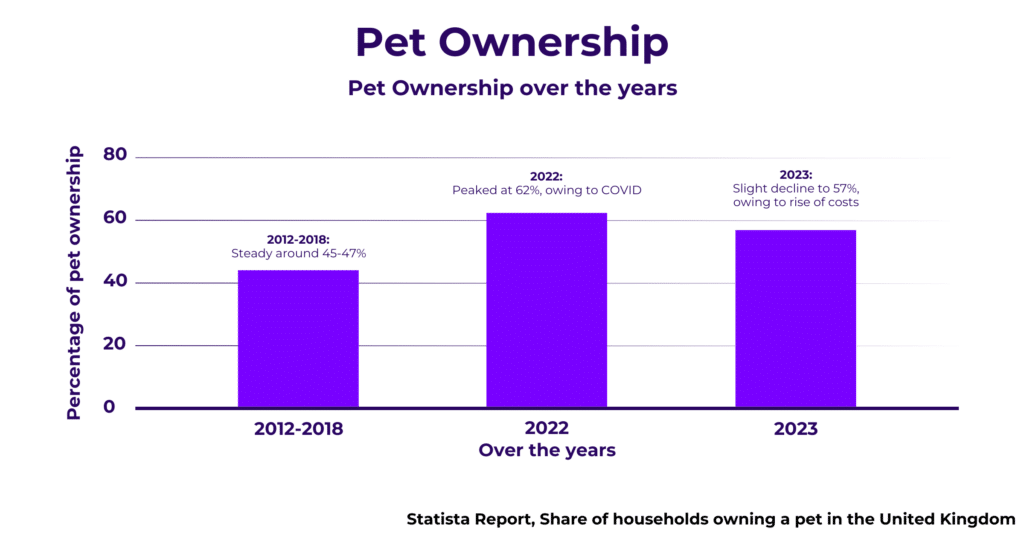
The share of households owning a pet in the United Kingdom remained relatively stable between 2012 and 2018, hovering around an estimated percentage of 45 to 47 percent. However, according to a Statista research, pet ownership levels peaked at an unprecedented high of 62 percent in 2022, likely as a result of the coronavirus pandemic and increased time spent at home.
However, in 2023, this figure shrank to 57 percent, although it is relatively higher than what we saw between 2012 and 2018. According to another study, 29% of respondents considered the cost when recently acquiring a pet. A possible sign of this is the rise of costs and a decline in the economy which makes it hard for a household to raise a pet and child, or either.
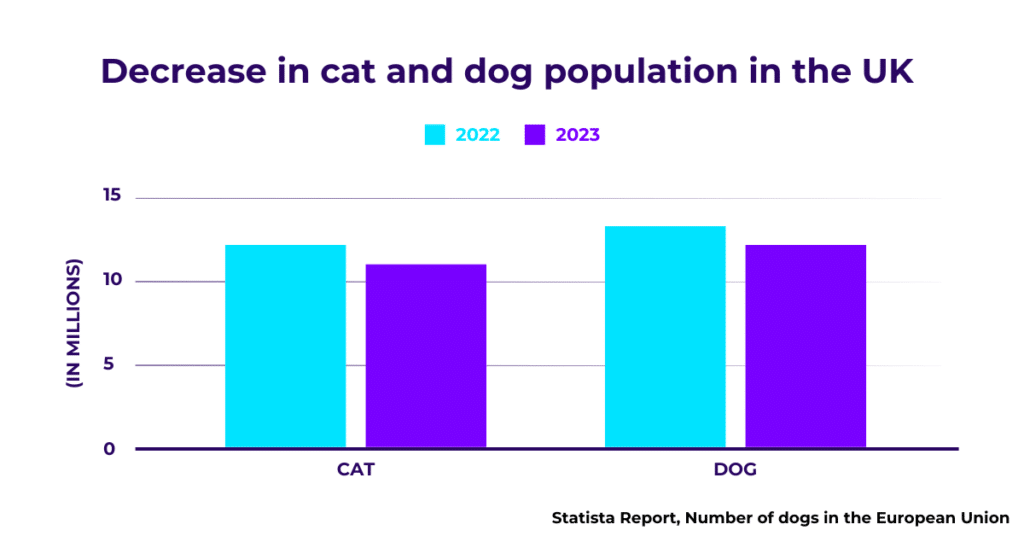
There has also been a decline in dog and cat populations by 6% in the UK, standing at 12 million and 11 million, respectively, as cited by Statista. This is owing to the rise of costs in the country making it difficult for people to afford a pet.
According to Dr Julien Poublon, ex-veterinarian and Co-Founder of Vetstoria, “As a practising vet, I've always viewed pet ownership more as a responsibility than a right. With the rising cost of living, it's important for potential pet owners to carefully evaluate their circumstances before adopting or owning a new pet. This includes assessing long-term commitment, understanding insurance expenses, and anticipating veterinary costs or even essential needs like proper nutrition and hydration. While reduced pressure on vets allows for quality care, it's important to approach this situation with sensitivity, acknowledging the difficult circumstances leading to these changes.”
Vetstoria is the most customisable online booking platform for veterinarians. Browse through the different customisations that can help streamline your veterinary clinic here.
According to Statista, as of 2020, the United Kingdom was the second highest-ranking European country in terms of its dog population, preceded only by Germany.
In countries like Germany, pet ownership has reached over 34 million pets, while France has over 13 million pet dogs alone. The annual spend on pets in these countries averages around €5 billion.
In Japan, the pet population is over 20 million, with an annual pet industry market value of approximately ¥1.5 trillion. Australia has one of the highest rates of pet ownership, with around 62% of households owning a pet.
Get the 2026 Pet Parent Research Report
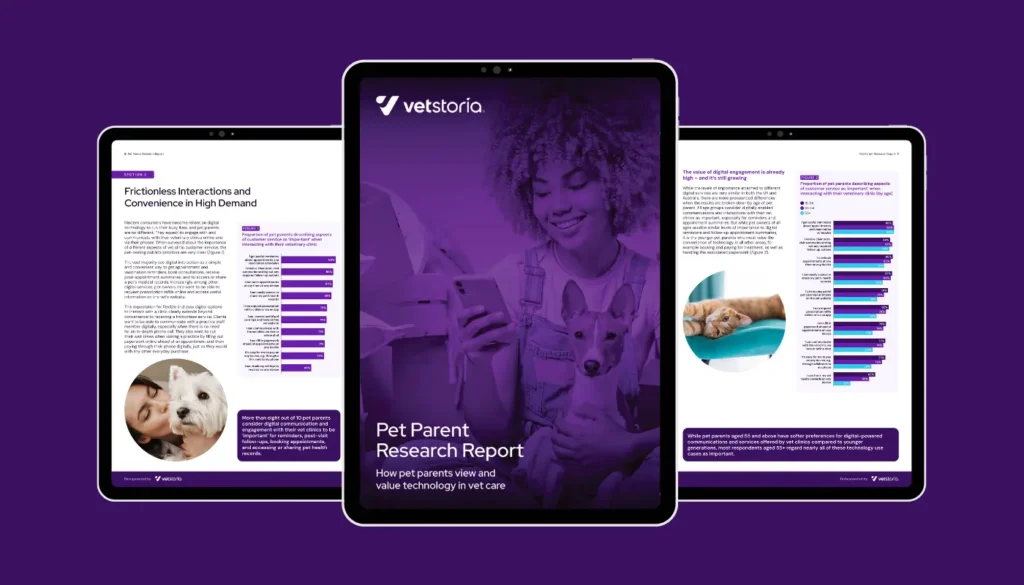
We surveyed 2,000 pet parents in the UK and Australia to uncover how digital tools, communication, and seamless clinic interactions shape satisfaction and loyalty. Get the 2026 Pet Parent Research Report now!
Consumer spending on pets and veterinary services in the UK
According to research, a third of Brits are spending more on their pet compared to this time in 2022, and only 13% of shoppers are spending less.
When asked what they would cut down on for their pups to get fed, 29% of dog owners said they would put their pal first and miss out on their food.
As the United Kingdom's pet population increased, so did consumer spending on pet food and pet-related products and services, as reported by Statista. Among the most expensive pet-related expenditures are veterinary and pet services, constituting almost four billion British pounds in 2020.
Importance of veterinarians and gender demographics
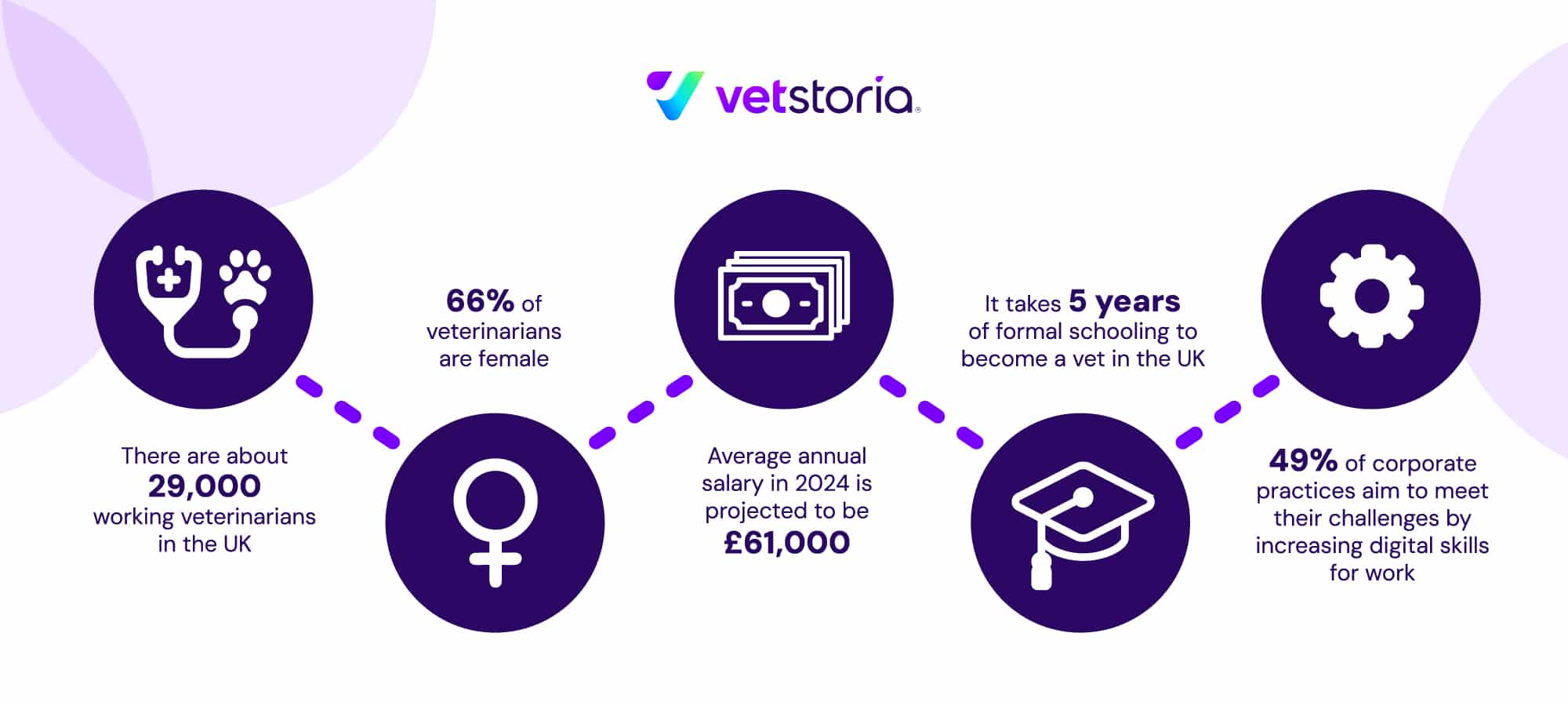
As of 2021, the UK employs approximately 27,000 veterinarians, according to Statista. This figure reflects the scale and importance of the veterinary profession in the UK.
A notable 77% of UK vets are female, a proportion higher than in most other nations, as reported by the RCVS. This demographic shift mirrors the broader trends in workforce diversity and gender representation in the profession.
To speak globally, Germany has over 40,000 practicing veterinarians, while France has around 18,000. Australia, despite its smaller population, boasts over 12,000 veterinarians.
Salaries and work hours of veterinarians in the UK and across Europe
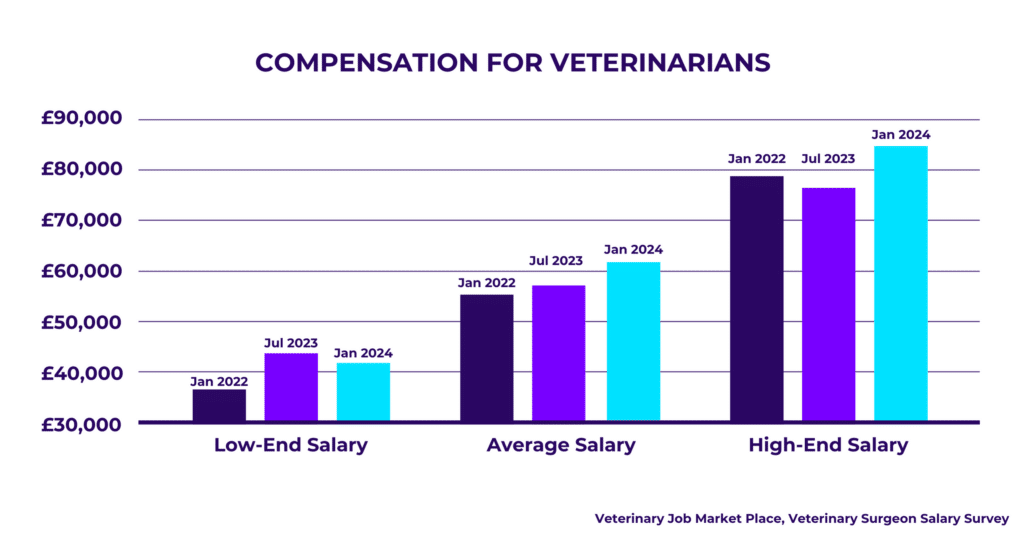
When analysing data from Veterinary Jobs Market Place on how much vets make in a year, it seems like there has been an upward trend in the pay scale for veterinarians from 2022 to 2024. According to the same research, an average salary seems to have increased from £55,000 in January 2022 to £61,000 in January 2024.
This can vary depending on experience, location, practice type, and specialisation. London often boasts the highest salaries, but the significantly higher cost of living often negates some of the financial advantages.
UK veterinarians typically work 50-55 hours per week, aligning with global averages. This statistic is sourced from an article in the Veterinary Practice. Owing to the number of hours a vet puts in, the salary figure does seem low.
Globally, in European countries, veterinarians have seen an average salary increase of about 3-5% annually. In Australia, the average annual salary for a veterinarian is around AUD 80,000, with a growth rate of about 2-4% per year.
Stress level and job satisfaction for veterinarians do not go hand-in-hand
We see a positive trend with veterinarians ranking among the top 20% of careers in terms of career happiness. This suggests many veterinarians find their work fulfilling and enjoyable, as per CareerExplorer. Veterinarians often express satisfaction with the positive impact they have on animals and their owners. This sense of purpose can be a rewarding aspect of the career.
However, in line with global trends, a staggering 70-80% of UK veterinarians report experiencing high levels of stress, according to Psychology Today. This alarming statistic highlights the urgent need for wellness and support systems within the veterinary community.
Something to note here is that job satisfaction might differ across countries or regions. For example, UK research suggests around 80% of veterinarians are satisfied with their career, while studies in the US have shown lower satisfaction rates.
Alleviating Psychological Stressors in Veterinary Clinics Report
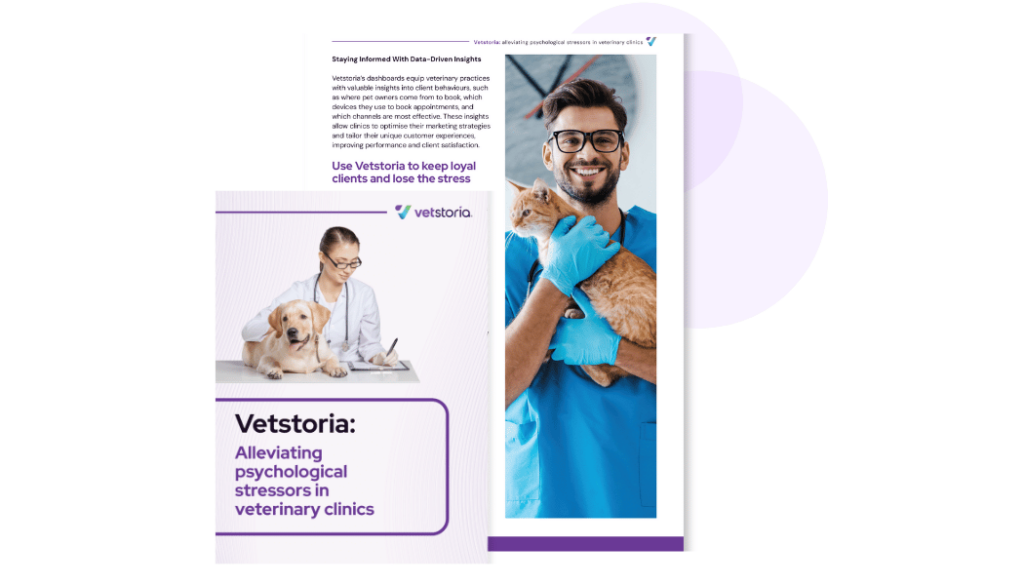
Vetstoria recognises the importance of mental health in the industry, which is why our solutions are designed to give your clinic the most so you can stress the least. Even better, we’ve created Alleviating Psychological Stressors in Veterinary Clinics to highlight the causes and impacts of clinic stress. In this report, we’re supporting Vetlife—a leading veterinary mental health charity—to explain how you can have more peace of mind. Download the report now.
Current Challenges for Veterinarians
According to the Federation of Veterinarians of Europe (FVE), high workload and staff shortages are the two most prime challenges faced by the veterinary industry. Both seem interlinked since fewer people in clinics generate more admin for vets to concentrate on rather than being able to provide quality care for pets.
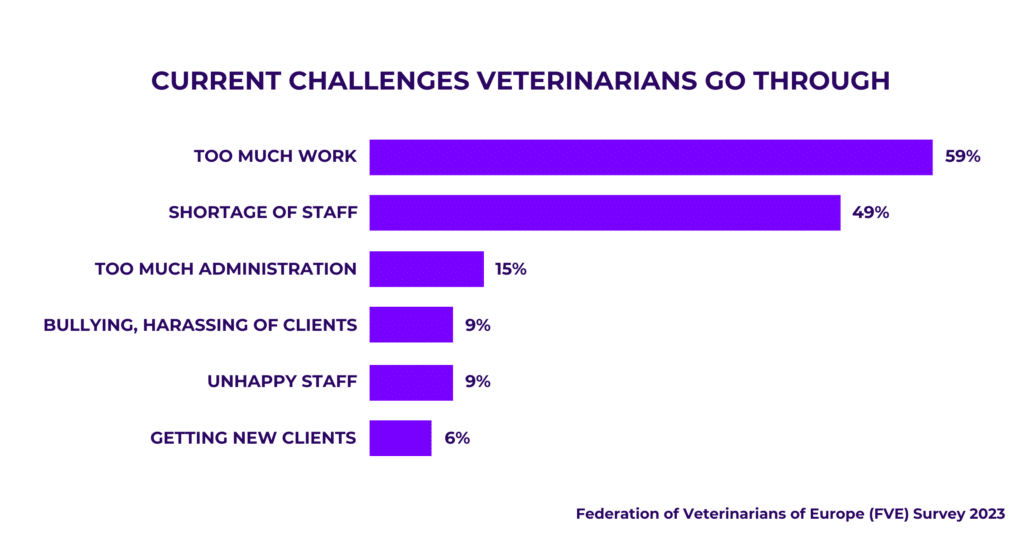
On the list of challenges was administration too — 15% of veterinarians single out this as a top challenge, followed by bullying, harassing or complaining clients (9%).
In Italy and Greece, more than 70% of vets singled admin out as a challenge. In the UK, it was 40%.
Vetstoria’s online booking platform has been helping Calder Vets save more than 60 hours in a month and reduce admin. Read their story here.
Save time and reduce errors with our 5 FREE veterinary checklists
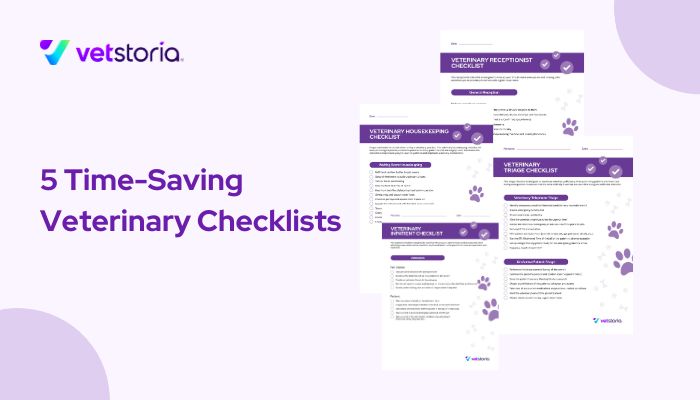
Our free downloadable veterinary checklists will help you maximise efficiency, save valuable admin time, and improve the pet owner experience within your practice. Download them now.
Tackling the challenge to improve veterinarian’s lives
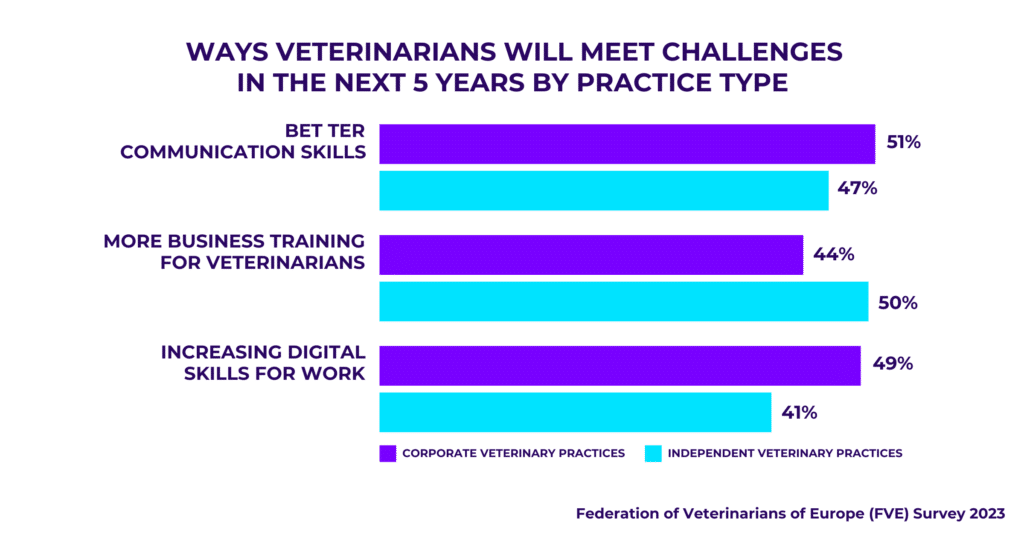
According to FVE, most corporate and independent clinics are looking at ‘more specialisation’, ‘better communication skills’ and ‘increasing digital intervention’ in clinics to tackle the challenges of extreme amounts of admin work, staff shortages and engaging new clients to provide quality care.
Veterinary Practices in the UK and Europe
The United Kingdom is home to approximately 5,331 veterinary practices, as stated by Christie & Co. This number indicates the breadth of animal healthcare services available across the country.
Top cities for veterinarians in the UK, such as Edinburgh, Devon, Cambridgeshire, and Reading, offer high salaries and attractive living conditions. These cities are generally considered among the best places for vets to work in the UK.
Globally, countries like Germany, France, and Italy have a high number of practising veterinarians, reflecting the growing demand for pet care services. In the Asia-Pacific region, Australia and Japan have a notable number of veterinary professionals.
Revenue in the UK Veterinary Market
The veterinary market in the UK is expected to reach a value of £5.7 billion by 2027, growing at a compound annual growth rate (CAGR) of 4.6% from 2022 to 2027, according to Ibis World. This growth trajectory underscores the economic significance of the veterinary sector.
Dissatisfaction Among Veterinarians
Although specific UK data is scarce, global studies indicate that veterinarian suicide rates are 3-4 times higher than the general population, a critical issue highlighted by sources like the AVMA and The Guardian.
The most common reason for leaving the veterinary industry was ‘poor work-life balance’ with 60% of veterinarians quitting the industry citing this as the main reason.
Boost morale and increase productivity in your practice with this free survey template.
Positive trends in the veterinary industry
Revolutionising veterinary practices through digital innovation
The ongoing digital transformation is significantly impacting the veterinary sector, with online booking systems and enhanced websites leading the charge towards a more efficient and client-friendly future.
Here's a closer look at how these advancements are impacting veterinarians and clinic staff:
Impact on veterinary professionals:
A reduction in administrative tasks means more time for direct patient care and meaningful client interactions.
Enhanced client satisfaction results from the convenience of online booking and reminders, leading to increased loyalty.
Efficient scheduling ensures a smoother appointment flow, optimising resource use and minimising downtime.
Impact on Veterinary Practices:
Increased client engagement through portals and informative content encourages proactive pet care and fosters stronger relationships.
Improved brand image is achieved with professional, informative websites, attracting new clients and bolstering the clinic's reputation.
Streamlined communication via online forms and messaging within client portals eases the workload on staff.
Looking at trends, here are some features which can enhance workflows in veterinary clinics:
Enhancing veterinary clinics:
Interactive client portals offer secure access to medical records, prescription requests, and direct communication, minimising paperwork and enhancing the client experience.
Personalised content and educational resources on websites empower clients with knowledge, building trust and engagement.
Some future trends to note which can significantly impact veterinary clinics and professionals:
Future Trends:
Social media integration draws new clients and enhances community engagement.
Online reviews and reputation management play critical roles in building trust and attracting new business.
Data analytics offer insights into website traffic, booking patterns, and client preferences, guiding marketing strategies and operational improvements.
Embracing these tech trends not only propels veterinary practices into the future but also significantly enhances the quality of care and service provided to clients and their pets.
Fun Facts for Veterinarians

Tech & Trends:
Sniffing out disease: Researchers are training dogs to detect diseases like cancer and diabetes through scent! Can you imagine canine medical teams?
AI goes bionic: AI-powered prosthetic limbs for animals are in development, giving disabled pets a chance to run and play again.
Catio craze: 2024 might see an explosion of "catios" - outdoor enclosures for house cats to enjoy the fresh air safely. Prepare for purrs of gratitude!
Future Forecast:
Moon paws? A Japanese billionaire plans to send dogs to the moon by 2030. We hope they pack plenty of space kibble!
Vetting via VR: Imagine veterinary students practicing surgery on virtual animals in immersive VR environments. The future of learning sounds amazing!
Talking to your pet: Wearable devices that translate animal vocalizations might be just around the corner. Prepare for some fascinating (and possibly embarrassing) conversations!
FREE Webinar: Can technology bring you closer to your customers in veterinary care?
Join Vetstoria’s Co-Founders, Dr. Julien Renard and Dr. Julien Poublon, for a fun and insightful session that answers the question, “Can technology bring you closer to pet owners?”
Our speakers will share how integrating efficient systems can significantly reduce manual workload, prevent double bookings thanks to real-time checks, and allow staff to dedicate more time to patient care. Imagine walking into a warm, welcoming clinic, and being greeted with smiling faces. Technology makes it possible – by freeing up time for clinic staff to provide that personal touch.
Conclusion
In conclusion, the 2023 statistics and data paint a multifaceted picture of the veterinary profession in the UK, characterised by growth, challenges, and evolving dynamics. As we continue to navigate these trends, the veterinary community must address the issues of stress, work-life balance, and mental health, while capitalising on the opportunities presented by market growth and technological advancements.
As the market grows, ensure your administrative systems can handle the demand without adding staff workload. The right technology is key to sustainable growth. See how Vetstoria frees up front-desk time, reduces phone calls, and automatically optimises your schedule.
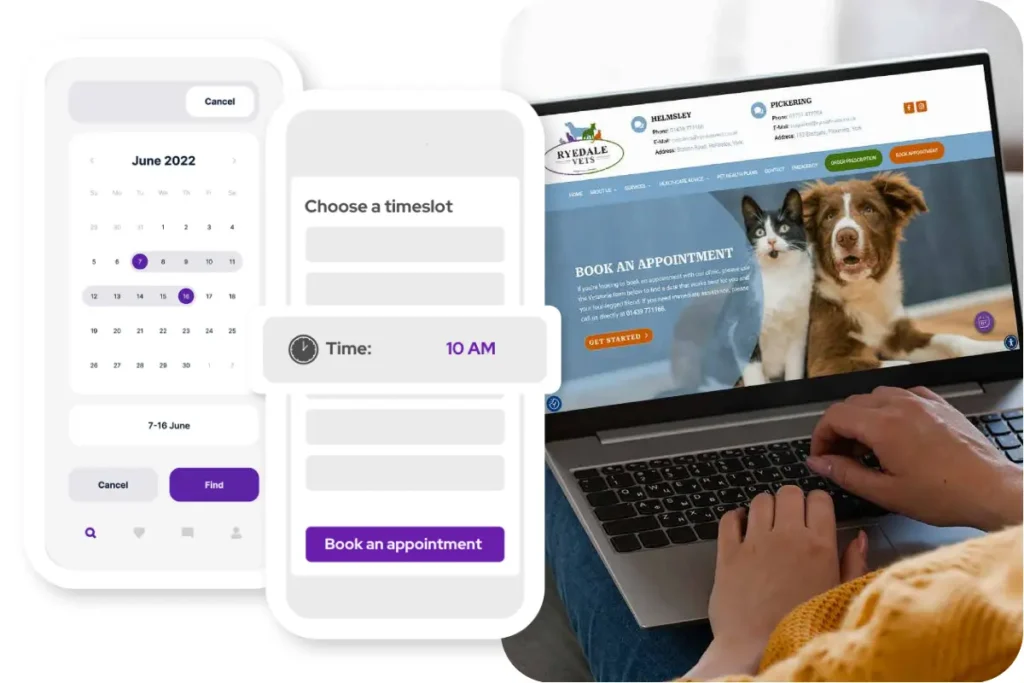
Vetstoria Online Booking and Veterinary Websites work together by reducing your administrative load and providing clients with 24/7, hassle-free convenience.
Get a professional website to attract pet owners and effortlessly automate appointment scheduling with Vetstoria. So you can book more clients – without the headaches. Speak to our team to elevate your digital client experience.

5 Loved Work Areas in Our Office That Fuel Productivity and Creativity

A well-designed office space can have a profound impact on employee satisfaction, productivity, and creativity. In our dynamic workplace, there are five distinct areas that our people absolutely love. These spaces go beyond the traditional cubicle setup, fostering collaboration, focus, and a sense of community. Let's explore these work areas that have become the heart of our office.
Working On Bean Bags:
Working on a bean bag introduces an element of comfort and informality to the workspace. The ergonomic support it provides, along with its relaxed posture, can spark a unique sense of creativity and focus. Whether brainstorming ideas or tackling tasks, the unconventional seating promotes a refreshing break from traditional office chairs. Its versatility accommodates different work styles, allowing individuals to find their ideal balance between relaxation and productivity. The bean bag's cozy embrace transforms the workspace into a welcoming cocoon, where work feels less like a chore and more like an enjoyable endeavor.
Working With a Larger Screen:
Working with a larger screen amplifies productivity and enhances the digital workspace experience. The expanded real estate allows for seamless multitasking, enabling side-by-side comparison and efficient information processing. Visual clarity and detail are heightened, reducing eye strain and improving focus. Complex tasks become more manageable, as ample screen space accommodates intricate designs, extensive documents, and intricate code. Engaging with data-intensive projects becomes effortless, promoting smoother workflows and reducing the need for constant scrolling. Overall, a bigger screen transforms work into a panoramic canvas, empowering individuals to navigate their tasks with precision and efficiency.
Stand up Working Corners:
Stand-up working redefines the traditional office setup, infusing it with health-conscious dynamism. This ergonomic approach encourages movement, reducing sedentary hours and fostering better posture. The option to alternate between sitting and standing boosts energy levels, enhancing alertness and creativity. It also aids circulation and can alleviate back discomfort. Stand-up workstations promote collaboration by making interactions more spontaneous and engaging. With a focus on well-being, stand-up working cultivates a more vibrant and interactive workspace, ultimately nurturing healthier, more productive individuals.
Working in a Meeting Booth:
Working in a meeting booth offers a private haven amidst the bustling office. These compact spaces facilitate focused tasks and confidential discussions, shielding from distractions. The enclosed environment enhances concentration and creativity, making it ideal for brainstorming or detailed work. Equipped with technology for virtual meetings, it ensures seamless connectivity with remote colleagues. The meeting booth serves as a flexible sanctuary, accommodating solo work or small group collaborations. Its soundproof design ensures a quiet haven, allowing individuals to immerse themselves in tasks or engage in productive discussions without disruptions.
Working Alongside Team Members:
Working alongside team members cultivates a synergistic atmosphere, fostering collaboration and camaraderie. Immediate access to diverse perspectives and skills fuels innovative problem-solving, accelerating project timelines. Face-to-face interactions streamline communication, minimizing misunderstandings and promoting quick decision-making. Collective motivation thrives in this environment, as shared goals inspire mutual support and accountability. Social bonds strengthen, enhancing the overall work experience and job satisfaction. The dynamic exchange of ideas stimulates creativity and personal growth, while real-time feedback facilitates continuous improvement. Working together, team members create a powerhouse of collective expertise that drives the achievement of shared objectives.

5 Essential Pieces of Information We Check Before Shortlisting A CV

In today's competitive job market, making yourself stand out from the crowd is crucial. To catch the attention of recruiters, it's essential to have certain key pieces of information publicly available. In this blog post, we'll explore the five essential details you should maintain in your online presence to increase your chances of being shortlisted by recruiters.
An Updated LinkedIn Profile:
LinkedIn has become the go-to platform for professionals and recruiters alike. Your LinkedIn profile is essentially your online resume and networking tool, so it's crucial to keep it updated with your latest achievements, work experience, skills, and educational background. An eye-catching headline and a well-written summary can also help showcase your unique value proposition and career aspirations. Additionally, having professional recommendations and a respectable number of connections can further enhance your credibility.
Professional Portfolio or Personal Website:
Incorporating a professional portfolio or personal website can make a significant difference in how recruiters perceive you. This platform allows you to showcase your projects, work samples, articles you've written, or presentations you've given. A well-designed and organized portfolio can effectively demonstrate your skills and expertise, leaving a lasting impression on potential employers.
Relevant Industry Certifications:
Certifications serve as evidence of your commitment to professional growth and development. When applying for specific roles, having relevant certifications can act as a strong signal to recruiters that you possess the necessary expertise. Whether it's a technical certification, project management qualification, or industry-specific training, displaying these achievements can help recruiters understand your dedication to staying at the top of your field.
Public Endorsements and Testimonials:
Public endorsements and testimonials from colleagues, supervisors, or clients can add authenticity to your professional image. Platforms like LinkedIn offer the feature to request and display endorsements for specific skills. Additionally, if you receive positive feedback from clients or colleagues, consider seeking their permission to publish testimonials on your personal website or portfolio. These endorsements provide social proof of your capabilities and can significantly boost your credibility in the eyes of recruiters.
Contributions to the Community:
Involvement in community initiatives, open-source projects, or professional groups can set you apart from other job seekers. Recruiters value candidates who actively participate in their industry or community, as it reflects a sense of passion and dedication. Make sure to highlight any volunteer work, mentoring activities, or contributions to industry forums to showcase your commitment to the growth and advancement of your field.
In conclusion, building a strong online presence with these five essential pieces of information can significantly improve your chances of being shortlisted by recruiters. Remember to regularly update your profiles, demonstrate your expertise through a professional portfolio, acquire relevant certifications, gather endorsements and testimonials, and actively engage in community initiatives. By doing so, you'll present yourself as a standout candidate and increase your opportunities for landing your dream job. Best of luck on your job search journey!

Building Bonds Beyond the Office: Beach Clean-up with Colleagues

In the fast-paced corporate world, it's easy for employees to get bogged down with deadlines and meetings, often overlooking the importance of stepping away from the desk and engaging in activities that foster team bonding and environmental responsibility. As the sunlit shores beckon, an unconventional yet impactful way to strengthen office camaraderie is through a beach clean-up initiative with your office colleagues. Beyond the typical team-building exercises, this hands-on experience allows co-workers to come together, create lasting memories, and make a positive impact on the environment. So, let's delve into how a beach clean-up adventure can foster connections beyond the confines of the office
Uniting for a Common Cause
The prospect of cleaning up a beach may not initially seem enticing, but when your colleagues join hands for a shared purpose, the energy and enthusiasm are infectious. Team members quickly realize that they are part of a collective effort that extends far beyond their daily office tasks. This common cause fosters a sense of togetherness, building bonds that go beyond the regular office dynamics.
Breaking Down Barriers
A beach clean-up day is an equalizer where everyone is on the same footing – no job titles or ranks matter when donning gloves and picking up trash. As co-workers work side by side, they open up to one another, sharing personal stories, hobbies, and interests, creating connections that transcend the office environment. Walls are broken down, and friendships begin to blossom.
Fostering Environmental Awareness
Beach clean-ups offer an opportunity to educate colleagues about the detrimental effects of pollution on our oceans and marine life. Witnessing the immediate impact of their actions can ignite a sense of environmental responsibility, encouraging them to make more eco-friendly choices in their personal and professional lives.
Embracing Problem-Solving Skills
Cleaning up a beach requires teamwork and problem-solving abilities. As your office team navigates through the challenge of efficiently collecting and disposing of litter, they tap into their collective creativity and ingenuity. This exercise empowers individuals to think outside the box and collaborate effectively – skills that can be directly applied to their work settings.
Strengthening Leadership Skills
Within any group, leadership qualities often emerge during challenging tasks. As some team members take charge and others follow, the beach clean-up becomes a canvas to identify and nurture leadership potential among colleagues. These experiences can be invaluable for building a strong team capable of leading and supporting each other at the workplace.
Encouraging a Healthier Lifestyle
A beach clean-up day encourages physical activity and time spent outdoors, promoting a healthier lifestyle. Moving away from the sedentary office routine, your colleagues will not only feel invigorated but also appreciate the importance of maintaining a work-life balance.
A beach clean-up with office colleagues offers more than just a day away from the office – it presents an opportunity to bond, learn, and make a positive impact on the environment. Beyond superficial team-building activities, this shared experience allows colleagues to connect on a deeper level, fostering relationships that are more likely to thrive back in the workplace. The lessons learned from working together towards a common goal, along with the environmental awareness instilled, have a lasting impact that goes beyond the sandy shores. So, next time you're planning a team-building event, consider trading the conference room for the beach and watch your team flourish in unexpected ways.

05 events we conducted at office that people really loved

In the fast-paced world of work, employee engagement and satisfaction play a pivotal role in driving productivity and success. To create a thriving workplace culture, organizations are increasingly recognizing the value of conducting fun events at the office. These enjoyable gatherings not only provide a much-needed break from the routine but also offer a wide array of benefits that contribute to a more motivated and cohesive workforce.
World Chocolate Day Celebrations
Chocolate Day celebration at the office brings joy and sweetness to the workplace. Employees indulge in delectable chocolates, fostering camaraderie and boosting morale. The delightful event creates a fun and relaxed atmosphere, promoting team bonding and leaving everyone with smiles on their faces. It's a perfect way to celebrate and appreciate colleagues!
World Ocean Day - Beach Clean Up
Beach clean-up with office friends combines environmental stewardship and team-building. Working together to preserve the beach's beauty fosters a sense of pride and purpose. The shared experience strengthens friendships, promotes a positive work culture, and leaves a lasting impact on both the environment and the camaraderie among colleagues.
World Beer Day - Beer, Games & Bites
Fun events encourage teamwork and collaboration in a relaxed setting. Participating in games, challenges, and team-building activities fosters positive relationships among colleagues and improves communication.
Trivia Quiz Competition
A trivia quiz competition at the office sparks excitement and friendly competition. Colleagues showcase their knowledge and problem-solving skills, creating a dynamic learning environment. The event fosters teamwork, communication, and a sense of achievement. It promotes a fun break from work, boosting morale and strengthening bonds among employees.
Mid Year Bash
The office mid-year party night is a much-awaited celebration. It offers employees a chance to unwind and socialize, building lasting connections. With music, games, and delicious food, it boosts team spirit and morale. The event reflects appreciation for hard work, fostering a vibrant work culture and re-energizing everyone for the rest of the year.

Top Social Platforms to Boost Your Online Presence as someone in Tech

In today's digital age, job searching and recruitment processes have undergone a significant transformation. While traditional methods like submitting resumes and attending job fairs remain relevant, recruiters now heavily rely on social media to find potential candidates. As a job seeker, being present on the right social platforms can significantly increase your chances of being discovered by recruiters. In this blog, we will explore the top social platforms you need to be present on to maximize your online visibility and attract recruiters.
LinkedIn: The Professional Powerhouse
LinkedIn is the go-to platform for professional networking and job hunting. It boasts over 700 million users, making it an indispensable tool for both job seekers and recruiters. A well-optimized LinkedIn profile can act as your digital resume, showcasing your work experience, skills, accomplishments, and recommendations from colleagues or supervisors. Regularly engaging with relevant content, joining industry groups, and connecting with professionals in your field will help boost your visibility to potential recruiters
Twitter: A Platform for Real-Time Engagement
Twitter's fast-paced and dynamic nature makes it an excellent platform to showcase your expertise and industry knowledge. By actively participating in conversations, sharing valuable insights, and following key influencers in your field, you can position yourself as an authority in your industry. Utilize relevant hashtags to increase your tweet's reach and attract recruiters searching for talent in specific areas.
GitHub: Showcasing Your Technical Skills
For tech-savvy professionals, GitHub is a must-have platform. It is a code-hosting platform that allows developers to share and collaborate on projects. By actively contributing to open-source projects or sharing your coding projects, you can demonstrate your technical skills, problem-solving abilities, and passion for your craft. Recruiters often seek developers on GitHub, making it a powerful tool to be discovered for tech-related roles.
Instagram: The Visual Storyteller
Instagram may not seem like an obvious choice for job searching, but it can be a powerful tool, especially for creative professionals. Whether you're a graphic designer, photographer, artist, or marketer, Instagram allows you to showcase your portfolio in a visually appealing way. Use the platform to share your projects, creative process, and behind-the-scenes insights to captivate recruiters and potential employers.
In today's competitive job market, having a strong presence on the right social platforms is crucial for attracting recruiters and landing your dream job. LinkedIn, Twitter, GitHub, Instagram, and even Facebook can play instrumental roles in showcasing your skills, expertise, and personality to potential employers. Remember to maintain a consistent and professional brand across all platforms and engage regularly with relevant content and communities. By harnessing the power of social media, you can enhance your online visibility and increase your chances of being found by recruiters, paving the way for a successful and rewarding career.

The Power of Fun: Unraveling the Benefits of Conducting Fun Events at the Office

In the fast-paced world of work, employee engagement and satisfaction play a pivotal role in driving productivity and success. To create a thriving workplace culture, organizations are increasingly recognizing the value of conducting fun events at the office. These enjoyable gatherings not only provide a much-needed break from the routine but also offer a wide array of benefits that contribute to a more motivated and cohesive workforce.
Enhanced Employee Morale
Fun events inject a sense of excitement and joy into the office atmosphere, resulting in boosted employee morale. When employees look forward to engaging in enjoyable activities, they feel valued and appreciated by the organization.
Team Building and Collaboration
Fun events encourage teamwork and collaboration in a relaxed setting. Participating in games, challenges, and team-building activities fosters positive relationships among colleagues and improves communication.
Creativity and Innovation
Engaging in fun and creative events stimulates employees' imagination and innovative thinking. The freedom to explore new ideas during these events can lead to fresh perspectives and problem-solving approaches in the workplace.
Increased Productivity
A happier and more motivated workforce is likely to be more productive. Fun events act as a productivity booster by revitalizing employees' enthusiasm for their work and enhancing overall job satisfaction.
Improved Employee Retention
Employees who feel a sense of belonging and enjoyment in their workplace are more likely to stay loyal to the organization. Fun events contribute to a positive work culture, reducing turnover and attracting new talent.
Better Work-Life Balance
Fun events offer an opportunity for employees to strike a balance between work and personal life. Supporting work-life balance results in happier and more content employees, which in turn leads to higher job satisfaction.
Strengthened Employee Engagement
Engaging employees in fun activities fosters a sense of pride and belonging. Engaged employees are more committed to their work and are more likely to go the extra mile to achieve organizational goals.
Employee Appreciation
Fun events are an excellent way for organizations to show appreciation for their employees' hard work and dedication. Recognizing employees' contributions during these events reinforces a culture of gratitude and acknowledgment.
In conclusion, the value of conducting fun events at the office extends far beyond momentary enjoyment. These events serve as a catalyst for creating a positive and vibrant workplace culture. By enhancing morale, teamwork, and employee engagement, fun events contribute to increased productivity, improved retention, and a positive brand image. As organizations continue to prioritize employee well-being and job satisfaction, incorporating fun events into the office routine becomes a powerful tool for success.

The Benefits of Working from the Office for Employees in the Software Industry

The software industry has witnessed a significant shift towards remote work in recent years, with technological advancements enabling professionals to work from anywhere. However, despite this trend, there are several compelling reasons why working from the office remains advantageous for employees in the software industry. In this blog post, we will explore the benefits of working from the office, highlighting the positive impact it can have on collaboration, productivity, skill development, and overall job satisfaction.
Enhanced Collaboration and Communication
Working in close proximity to colleagues fosters effective collaboration and communication among software industry professionals. Being physically present in the office facilitates spontaneous discussions, brainstorming sessions, and face-to-face interactions, which often result in innovative ideas and solutions. The ability to engage in real-time collaboration significantly improves teamwork, encourages knowledge sharing, and boosts overall productivity.
Efficient Problem Solving
In software development, encountering and resolving complex problems is a common occurrence. Working from the office allows professionals to seek immediate assistance from colleagues, enabling faster problem-solving. The informal exchange of ideas, combined with quick access to subject matter experts, contributes to quicker turnaround times and higher-quality solutions. Additionally, in-person discussions enable better understanding of the problem, reducing misunderstandings and improving efficiency.
Skill Development and Mentoring
For professionals in the software industry, continuous skill development is crucial to stay ahead in a rapidly evolving field. The office environment provides a valuable opportunity for junior employees to learn from experienced team members through mentorship programs. In-person guidance, code reviews, and hands-on training sessions are more effective when conducted face-to-face, allowing for immediate feedback and personalized learning experiences. Working alongside industry veterans can help junior employees develop their technical expertise and professional networks.
Work-Life Balance
While remote work offers flexibility, it can blur the boundaries between work and personal life, leading to longer working hours and increased stress. Working from the office helps establish a clear separation between professional and personal life. Employees can leave work-related matters at the office, providing them with a better work-life balance and reducing burnout. This separation also allows for improved focus and relaxation during non-working hours, leading to increased job satisfaction and overall well-being.
Social Interaction and Networking
The office environment provides opportunities for social interaction and networking, which are essential for personal and professional growth. Water cooler conversations, lunch breaks, and team-building activities foster a sense of camaraderie and belonging. Building strong relationships with colleagues not only enhances teamwork but also creates a supportive work environment. Networking with peers and industry professionals in person can lead to valuable connections, career opportunities, and exposure to new ideas and perspectives.
Continuing Professional Development
To thrive in their careers, software engineers often engage in continuous learning beyond their formal education. Expenses related to professional memberships, technical certifications, coding boot camps, or online courses can be part of the expense sheet. Employers may provide support for these development initiatives, but it is important for engineers to track and document their expenses for potential reimbursement or tax purposes.
Professional Visibility and Recognition
Being physically present in the office offers increased visibility to supervisors and management. Regular face-to-face interactions allow employees to showcase their skills, contributions, and dedication, which can lead to better career prospects, promotions, and recognition. Moreover, the office environment promotes a sense of accountability, as individuals feel more accountable for their work when surrounded by colleagues and supervisors.
While remote work has its advantages, working from the office brings unique benefits to employees in the software industry. Enhanced collaboration, efficient problem-solving, skill development, work-life balance, social interaction, and professional visibility are all crucial aspects that contribute to employee satisfaction, productivity, and growth. Striking a balance between remote work and office-based collaboration can create a dynamic work environment that combines the best of both worlds, leading to overall success for employees and organizations in the software industry.

Demystifying the Software Engineer's Expense Sheet: Understanding and Optimizing Costs

Software engineers play a crucial role in building and maintaining the digital infrastructure of modern organizations. As professionals in a highly technical field, software engineers often incur various expenses related to their work. In this blog, we will explore the essentials of a software engineer's expense sheet, shedding light on common cost items and offering insights into how engineers can optimize their expenses.
Equipment and Tools
To excel in their work, software engineers heavily rely on cutting-edge equipment and tools. These expenses typically include computer hardware, software licenses, development kits, and specialized peripherals. Engineers should maintain a detailed record of these costs, as they may be eligible for tax deductions in some jurisdictions.
Training and Education
Software engineering is an ever-evolving field, requiring continuous learning to stay up-to-date with the latest technologies and methodologies. Expenses related to attending conferences, workshops, training courses, or subscribing to online learning platforms can be included in the expense sheet. Investing in professional development not only enhances an engineer's skill set but also contributes to career growth.
Subscriptions and Licenses
Software engineers often rely on various subscriptions and licenses to access development environments, cloud services, code repositories, project management tools, and other platforms. These ongoing expenses should be documented and reviewed periodically to ensure they align with project needs and budgetary constraints. Regularly evaluating subscriptions can help identify redundant or underutilized services, leading to potential cost savings.
Travel and Accommodation
Depending on the nature of their work, software engineers may need to travel for client meetings, team collaborations, or conferences. Expenses related to flights, accommodation, ground transportation, and meals during business trips should be recorded. To optimize these costs, engineers can explore options like advanced booking, shared accommodations, and expense tracking apps that simplify the reimbursement process.
Internet and Communication
Given that software engineers often work remotely or collaborate with distributed teams, a reliable internet connection and effective communication tools are crucial. Expenses related to internet service providers, mobile plans, video conferencing software, and collaboration platforms should be accounted for. Evaluating different service providers periodically can help identify cost-effective options without compromising quality.
Continuing Professional Development
To thrive in their careers, software engineers often engage in continuous learning beyond their formal education. Expenses related to professional memberships, technical certifications, coding boot camps, or online courses can be part of the expense sheet. Employers may provide support for these development initiatives, but it is important for engineers to track and document their expenses for potential reimbursement or tax purposes.
Miscellaneous Expenses
In addition to the above categories, there may be miscellaneous expenses that software engineers incur during their work. These could include software subscriptions for personal projects, reference books, coding challenges, tech gadgets, or even attending tech meetups. While it is essential to exercise discretion in managing these expenses, keeping a record of them ensures transparency and aids in financial planning.
Managing expenses effectively is a valuable skill for software engineers, allowing them to optimize costs, track investments, and enhance their financial well-being. By maintaining a detailed expense sheet, engineers can gain insights into their spending patterns and make informed decisions to achieve a healthier work-life balance. Moreover, understanding and optimizing costs contribute to their professional growth and financial stability in the dynamic field of software engineering.
